07926 334368
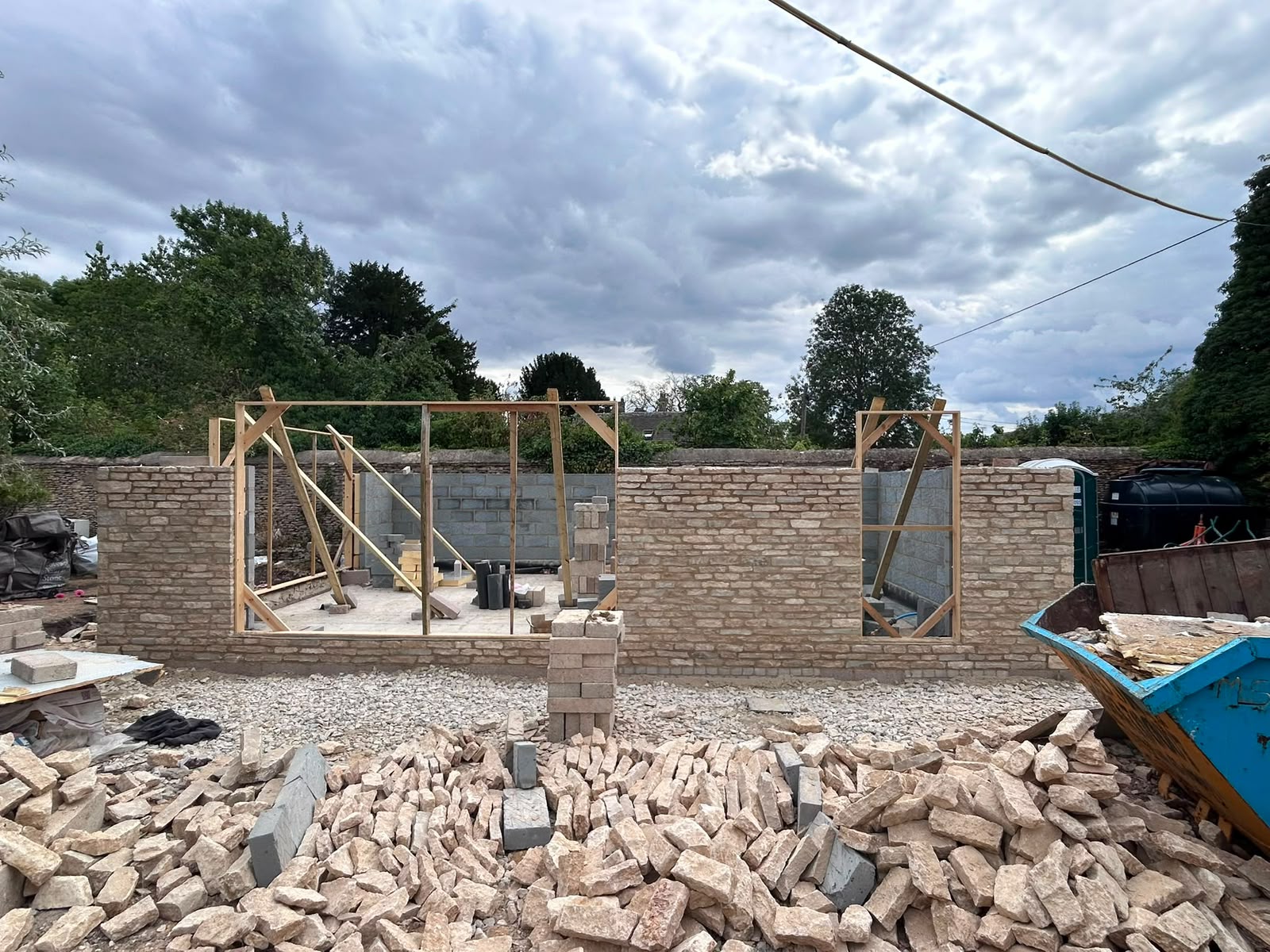
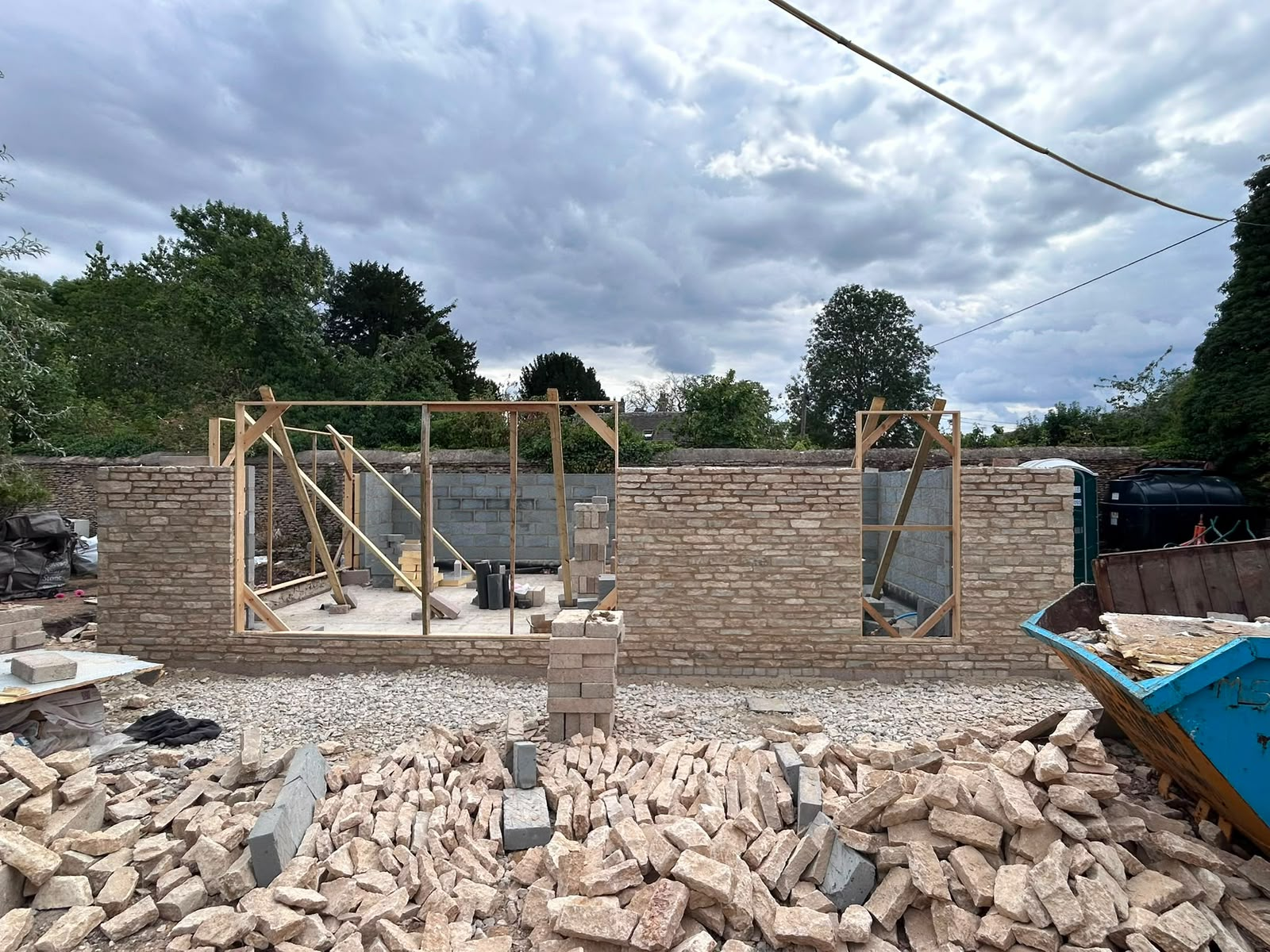
Cotswold stone garden walls under construction by DR Smith Building, with dressed stone openings framed for windows and reclaimed stone stacked on site.

Stone Laying · Cotswolds · Wiltshire

Cotswold Stone Waller
& Natural Stone Layer
for the Cotswolds & Wiltshire

Natural Cotswold stone walling, cladding and repair, laid by hand with the eye of a specialist. We match new stone to old properties so the finished wall looks like it's always been there.

40 years in the trade · Family-run · Free site visits · Written estimates in 3–5 working days

40 yrs
on the tools since 1988
3
family team on every job
3–5 days
for a written estimate
£5m
public liability insured

Overview

Natural stone, laid the way the Cotswolds have always laid it.

Cotswold stone is unforgiving. There are no straight edges to hide behind, no consistent coursing to lean on, and every stone has to be chosen, turned and placed with the eye. Do it well and it looks effortless. Do it badly and it looks like a garden centre rockery. Stone is a specialist's trade, and it's one we take seriously: the same three-person team, working the stone with our hands, matching what's already there.

What the service covers

New natural stone garden and boundary walls, retaining walls, feature elevations on extensions, stone cladding to modern blockwork, dry-stone-look walling with hidden mortar, coping and cock-and-hen coping, quoin stones and hand-shaped detail work, and repair of collapsed or leaning historic stone walls across the Cotswolds and Wiltshire.

Who it's for

Owners of Cotswold-stone properties who want any new work to sit properly against the existing house. Homeowners extending or replacing a boundary wall in a Conservation Area. Self-builders who want the front elevation in natural stone. Rural landowners with collapsed field walls that need putting back up honestly.

When it's needed

New extension where the elevation must be stone to match the property or satisfy planning. Boundary or garden wall being built or rebuilt. Existing stone wall showing bulges, leaning sections, missing copings, or stones that have worked loose. Cladding a new blockwork wall or garage in stone so it doesn't stick out against the rest of the property.

Why the trade matters

A stone wall is only as good as the person choosing where each stone goes. Coursing that's too regular looks fake. Coursing that's too random looks amateur. Mortar joints that are too wide, or too flush, or the wrong colour, ruin the whole wall. This isn't a trade you learn from a video: it's decades of picking up stones, turning them, and putting them down in the right place.

The cost of getting it wrong

What goes wrong when stone is laid without the skill.

Bad stonework is expensive to fix: because usually the whole wall has to come down and start again.

It reads as fake straight away

Machine-cut stone laid in perfect courses with wide mortar joints looks like cladding, not walling. On a Cotswold property it stands out from twenty yards away, and it stays looking wrong for the life of the building.

Mortar too strong destroys the stone

Cement-heavy mortar on soft Cotswold limestone is harder than the stone itself. Instead of the mortar wearing back, the stone spalls: losing face after face until the wall has to be rebuilt.

No proper 'through stones' means the wall bulges

A traditional stone wall needs stones that tie the two faces together at intervals. Skip them and the two faces separate over time: you see it as a bulge in the middle course, followed a winter or two later by a collapse.

Wrong coping lets water in

Copings are what keep the wall dry. Get them wrong: too flat, badly bedded, mismatched: and water sits on the wall, gets into every joint, freezes, and pushes stones apart.

Common mistake, The most common mistake we see: builders who lay brick every day treating stone the same way. Stone isn't brick. Coursing, mortar and joint profile all have to change, and the mind-set has to change with them.

Our process

Our process, from first site visit to final coping stone.

Same honest four-step system as every job we take on.

  1. 01

    Enquiry & phone call

    Tell us what you're planning. We reply within one working day and book a free site visit.

  2. 02

    Free site visit

    Dale walks the job, looks at the existing stone or the property it needs to match, and talks through options: reclaimed vs new, walling stone vs ashlar, hidden mortar vs raked joint.

  3. 03

    Written estimate in 3–5 working days

    Itemised estimate covering supply of stone, mortar, foundations and labour. No verbal quotes.

  4. 04

    Built & signed off

    Booked in, delivered on time, built in staged payments, handed over cleanly. Stone off-cuts are stacked tidily for the next repair or removed on request.

The benefits

Why our approach to stone laying pays off.

Matches the property properly

New stone chosen and mixed on-site to blend with what's there: not laid straight from the pallet in perfect batches.

Right mortar for the stone

Lime or lime-cement mixes on older walls to protect the stone; joint colour matched so the wall reads as one piece.

Coursing done with the eye

No two courses the same, no vertical joints stacked, larger stones at intervals to bond the wall: the way Cotswold walls have always been built.

Built to shed water

Proper coping, correct fall, joints struck to shed rain, no mortar-cap left to crack and let water in.

Sits well in a Conservation Area

Working in villages and market towns where planning cares how walls look: we care about it too.

Small team, long memory

The same family will still be here in ten years if you ever need us back: because we live in the area.

In detail

Stone laying, in detail.

The technical and material notes that separate a proper stone wall from a decorative one.

Stones we work with

Cotswold walling stone (natural, reclaimed and new-quarried), Bath stone and other oolitic limestones, sandstones for repair-matching where the property calls for it, and imported walling stone where budget or supply dictates. We'll always tell you the honest trade-off between reclaimed and new before you buy.
Mortars and pointing

Natural hydraulic lime (NHL 2 or 3.5) for older walls and Conservation Area work, it stays soft enough to protect the stone and lets the wall breathe. Cement-lime mixes for garden walls where planning doesn't dictate lime. Joint colour matched with the right sand: a small detail that changes everything about how the wall looks.

Wall types we build

Traditional mortared random-coursed stone walls (up to 1.8m without piers, higher with proper design), retaining walls with correct hidden drainage, dry-stone-look walls with concealed mortar for gardens, feature walls on extensions and porches, stone cladding on modern blockwork, boundary walls with cock-and-hen or half-round coping.

Situations we're called in for

Front elevation of a new extension that must be stone. Collapsed field boundary. Bulging or leaning boundary walls in villages across the Cotswolds. Replacing missing quoins on stone cottages. Cladding a new garage in stone so it doesn't jar with the main house. Repair to walls damaged by tree roots, vehicle impact or freeze-thaw over hard winters.

Residential vs commercial

Our stonework is almost entirely residential and rural: country properties, cottages, garden walls, small extensions. We'll take on light commercial where the work suits (school boundary walls, small office extensions in stone-vernacular villages) but we don't chase heritage restoration contracts.

Recent works

Recent stone laying and other jobs from around the patch.

See all our work
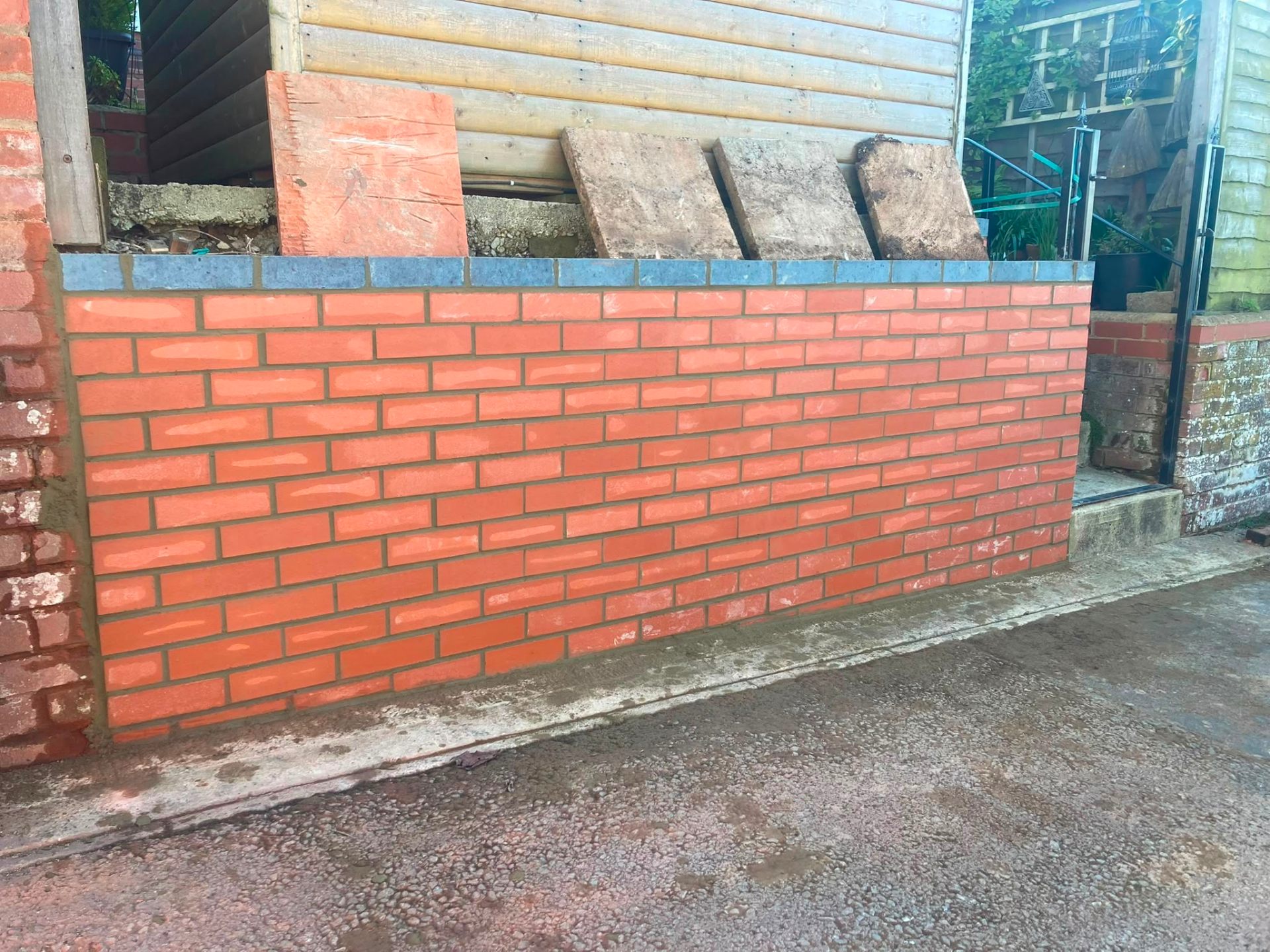
Completed red-brick garden wall by DR Smith Building bricklayers, Highworth.
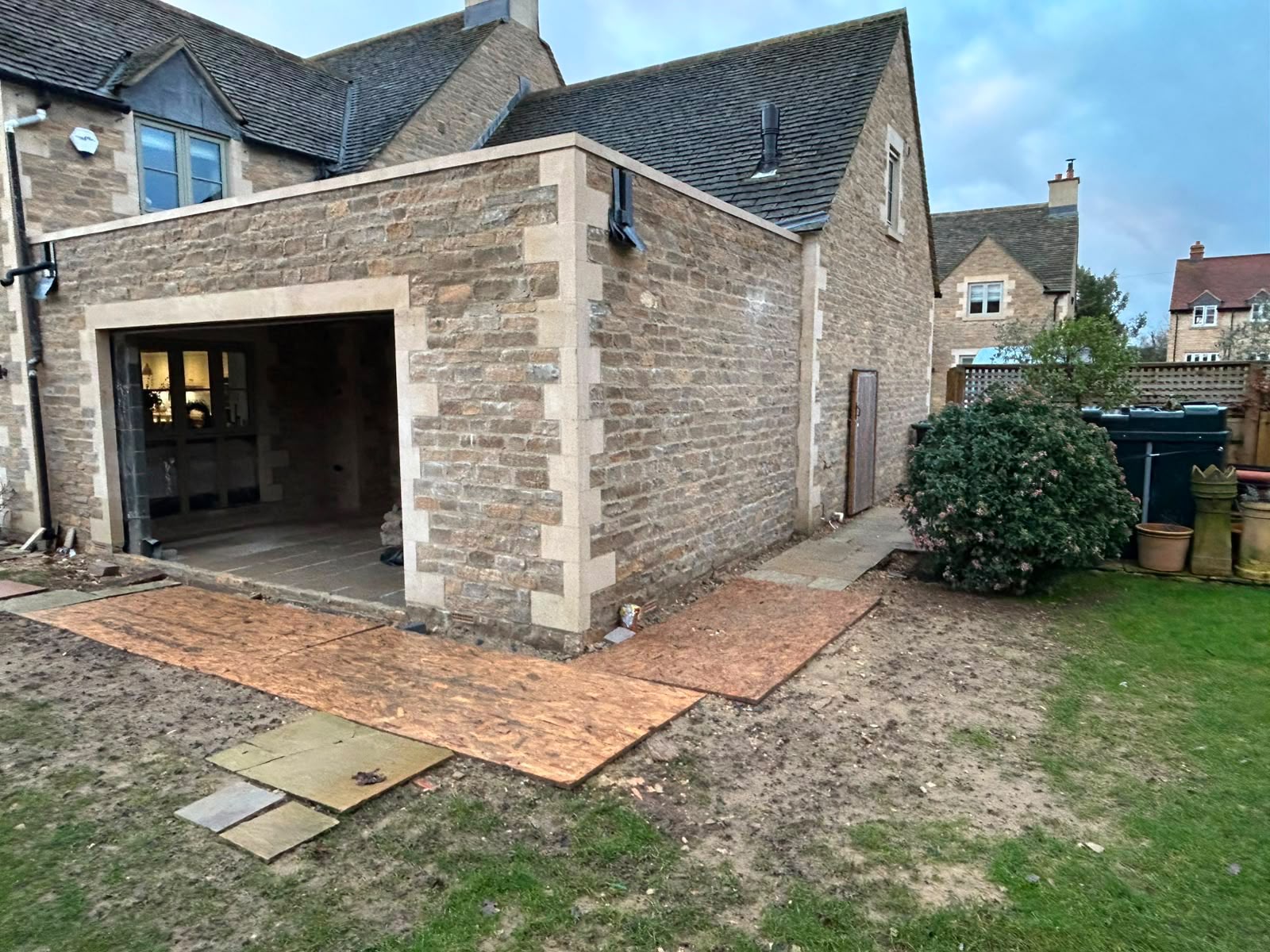
Completed natural stone extension in the Cotswolds by DR Smith Building stone masons.
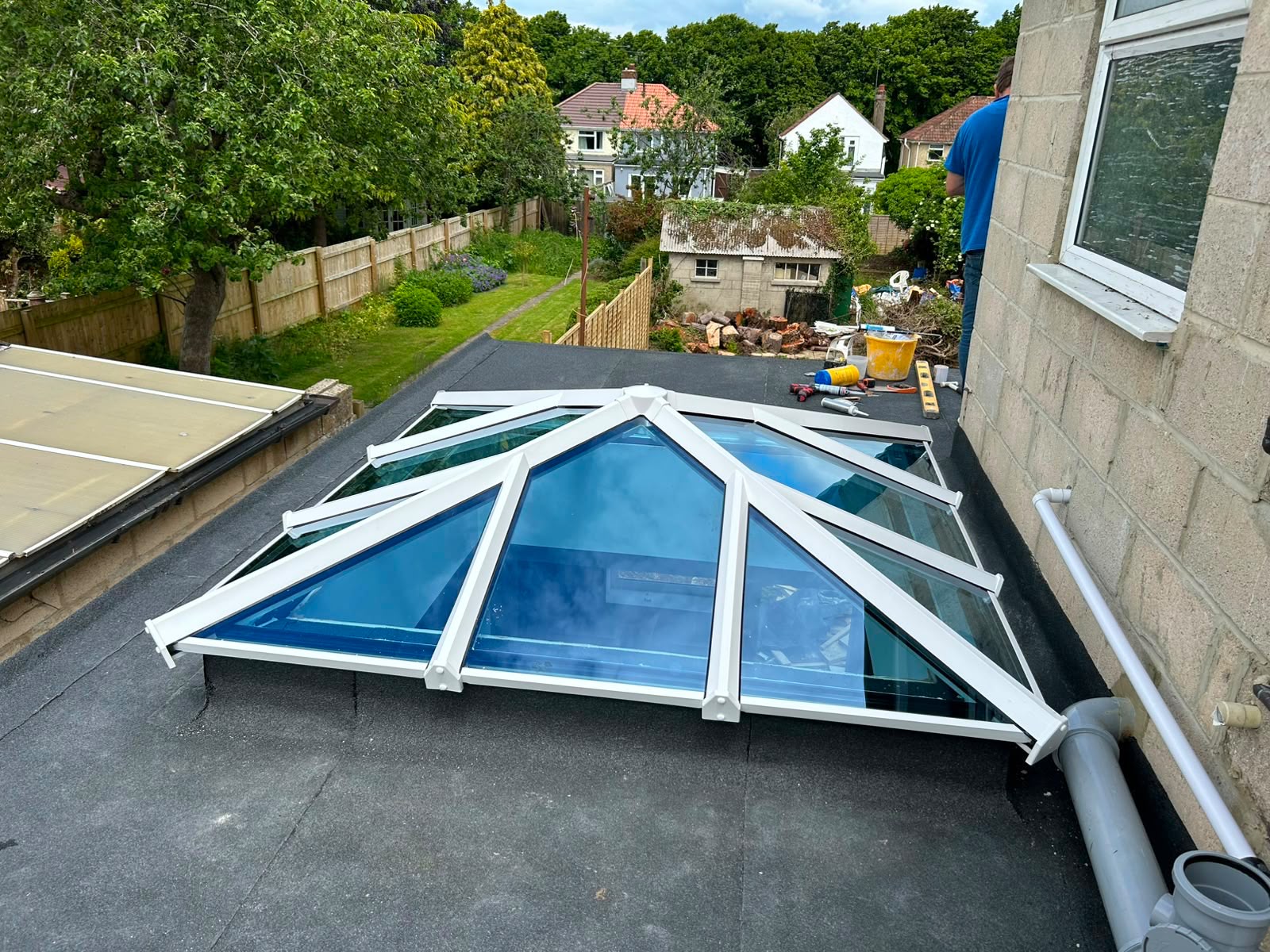
Installed glass roof lantern on an extension by DR Smith Building, Wiltshire.
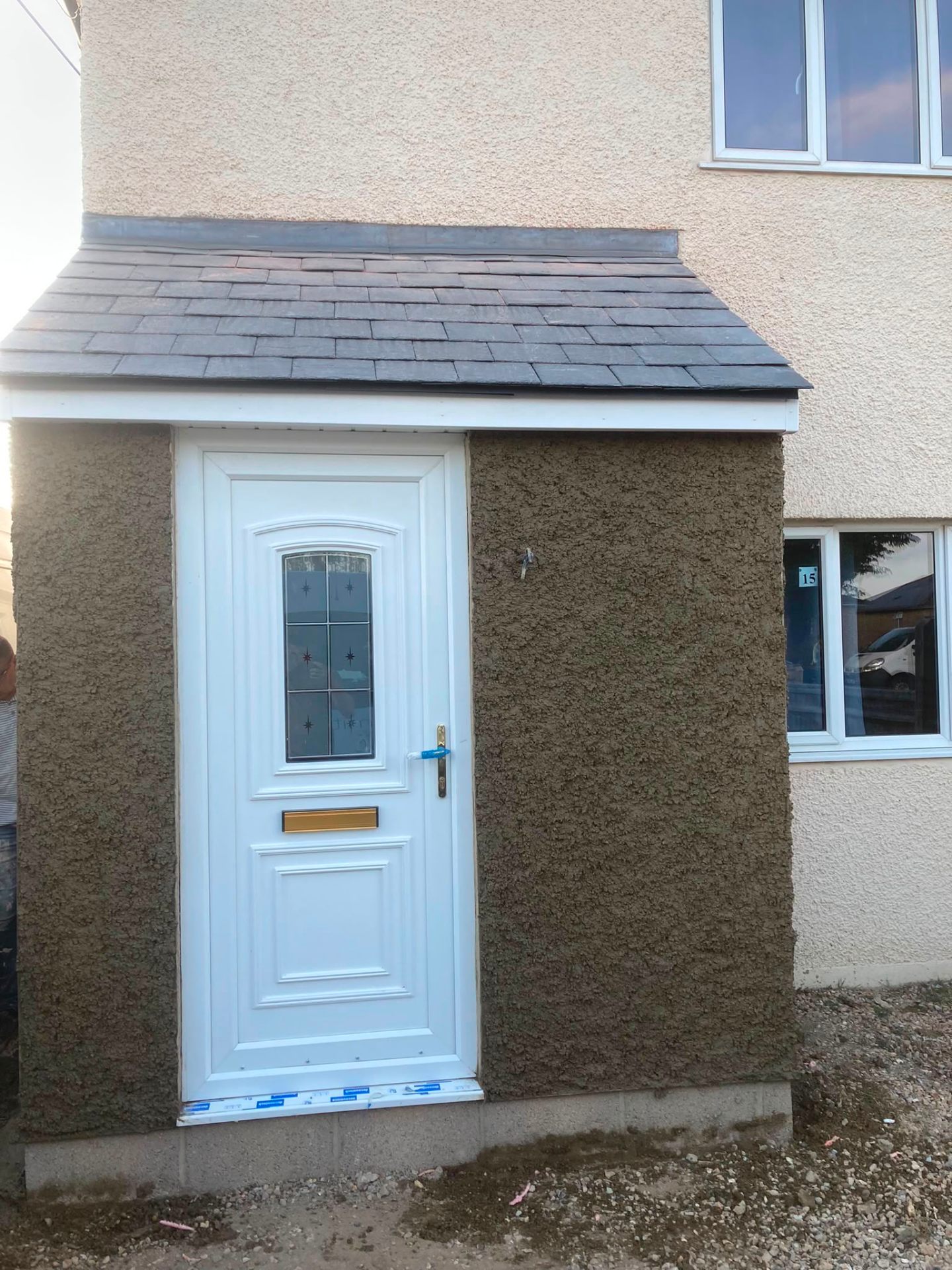
Completed pitched porch roof by DR Smith Building roofers, Swindon.
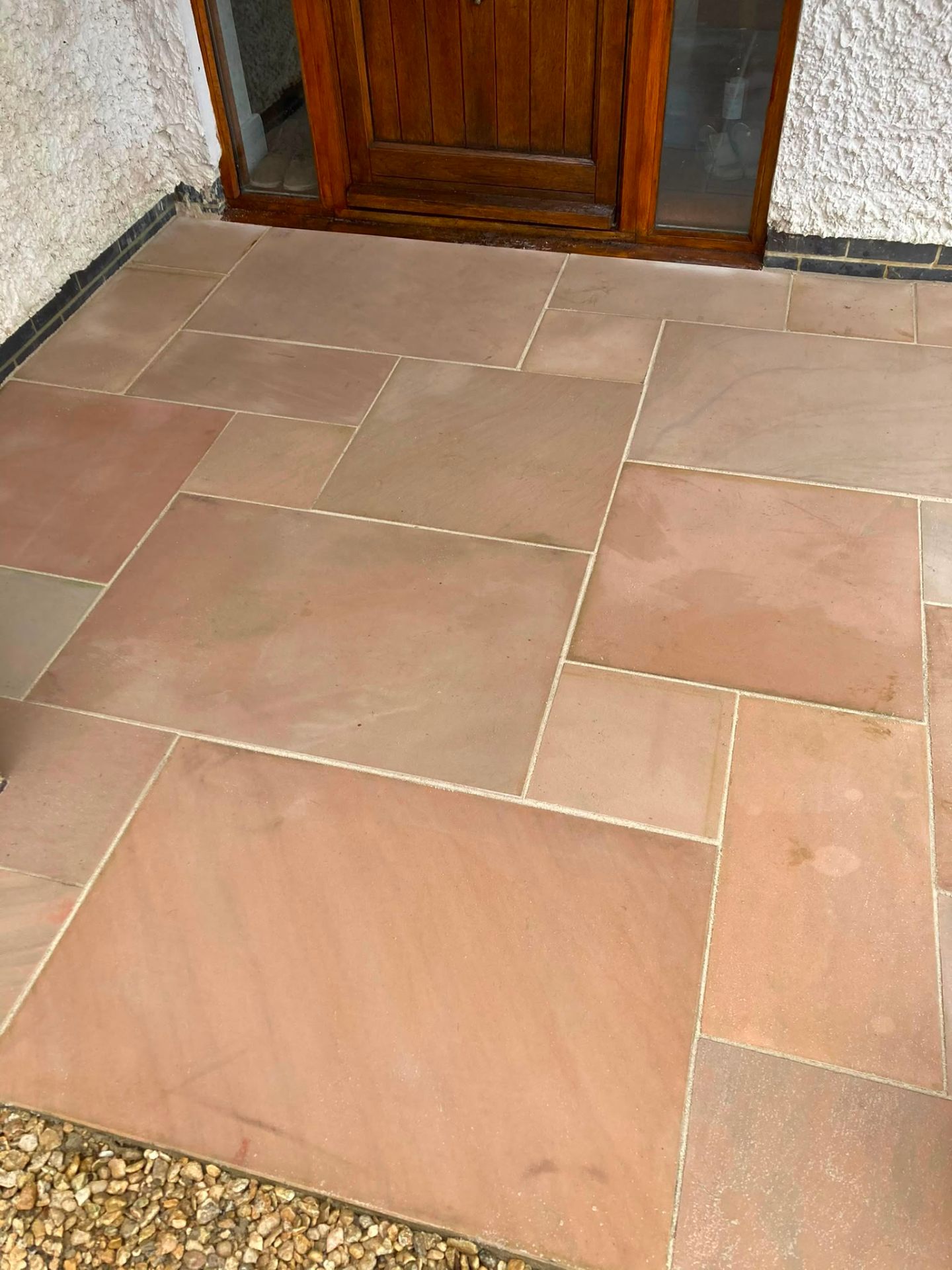
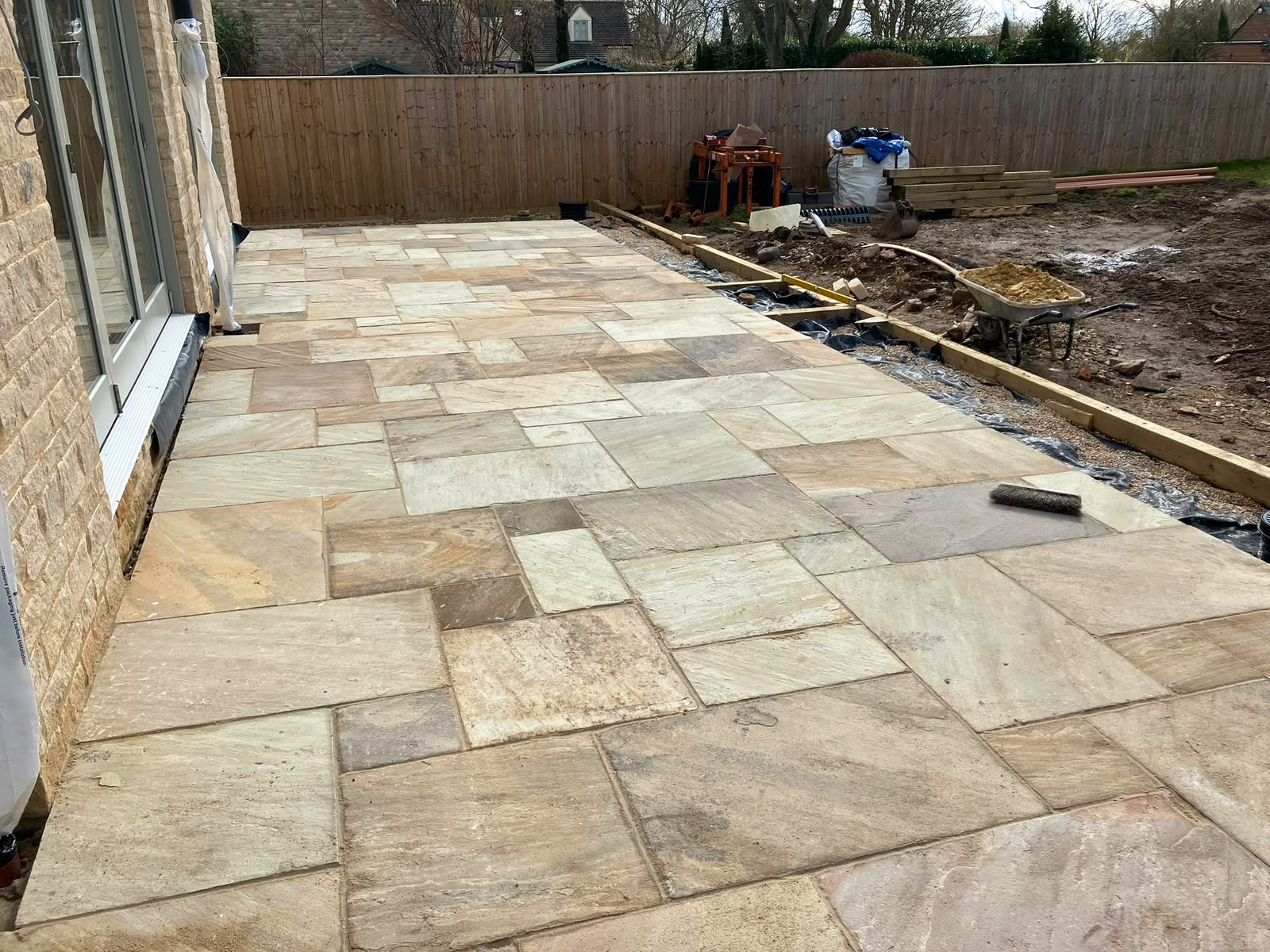
Finished sandstone patio and garden landscaping by DR Smith Building, Cotswolds.
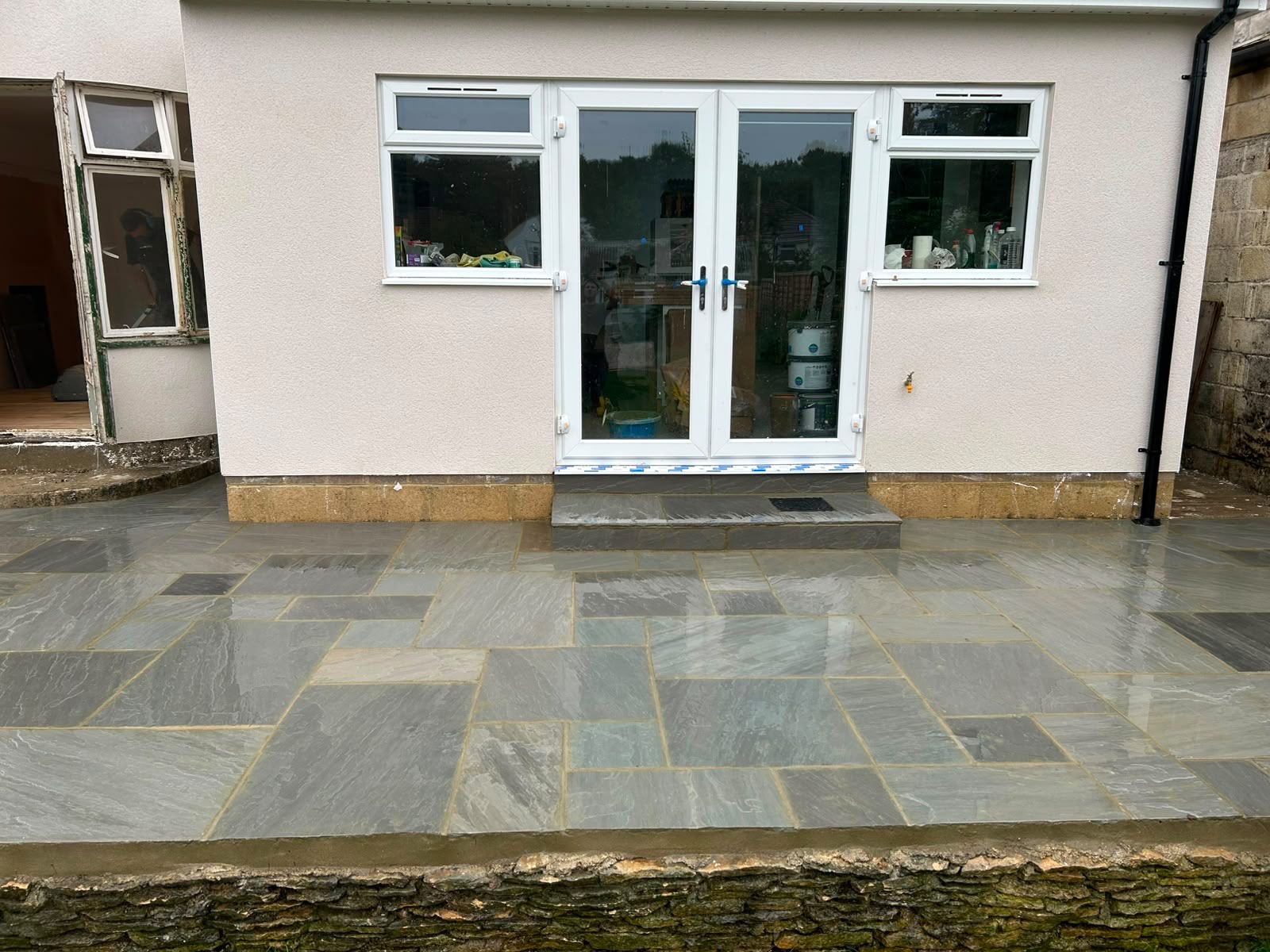
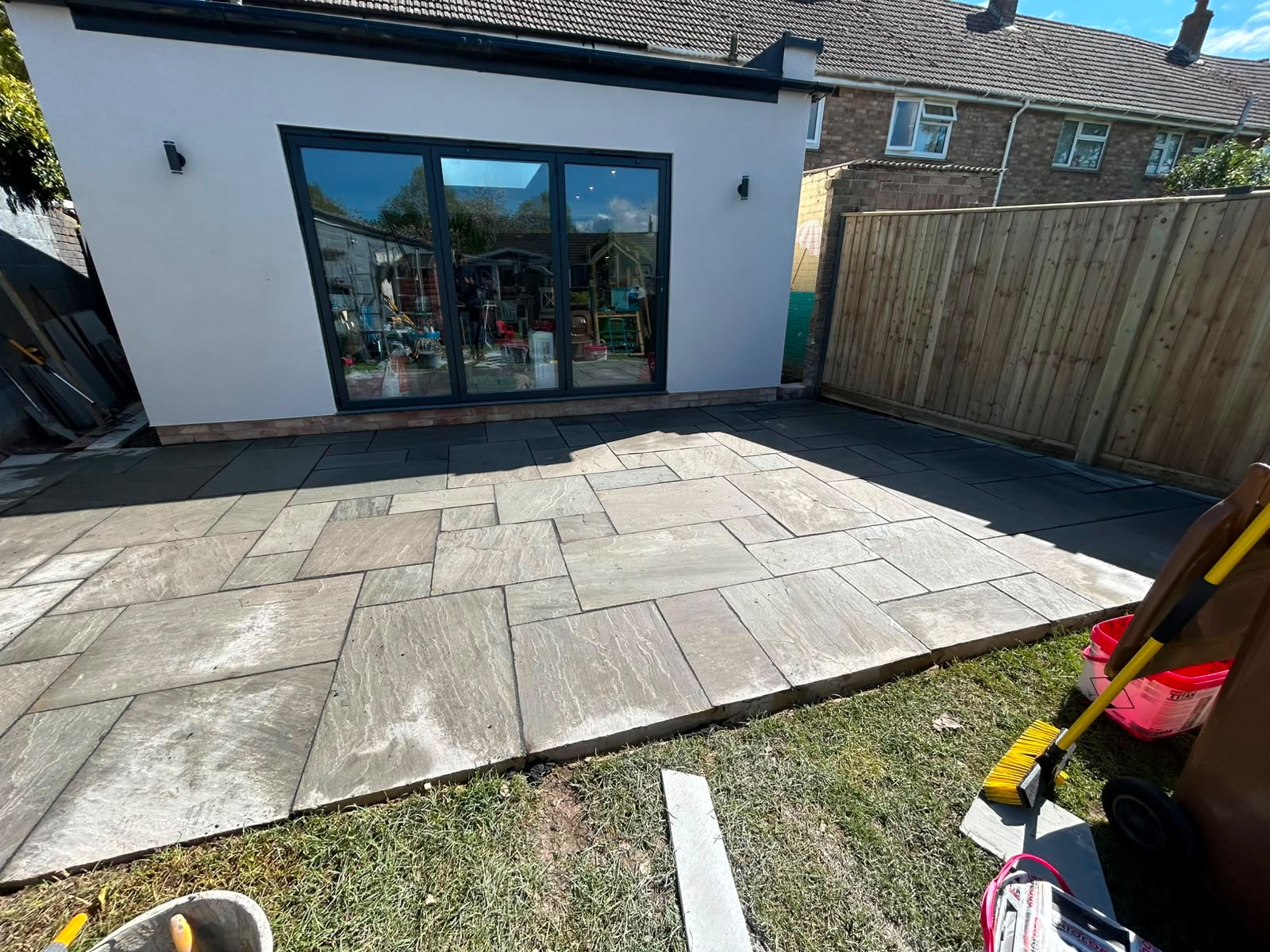
Completed sandstone patio with French doors by DR Smith Building, Wiltshire.
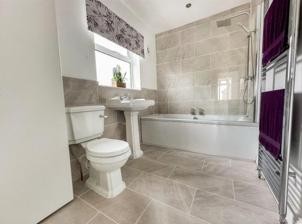
Completed tiled family bathroom fit-out by DR Smith Building general builders.
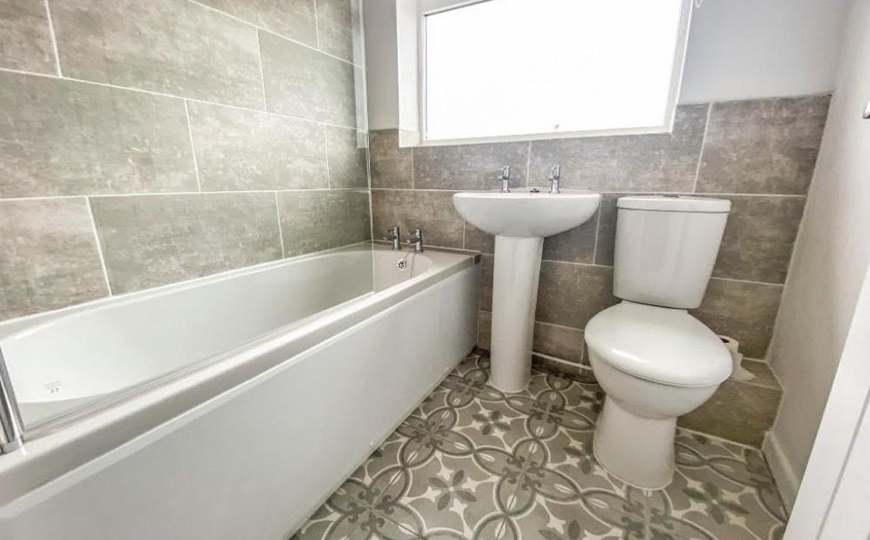
Completed tiled bathroom refurbishment by DR Smith Building, Highworth.
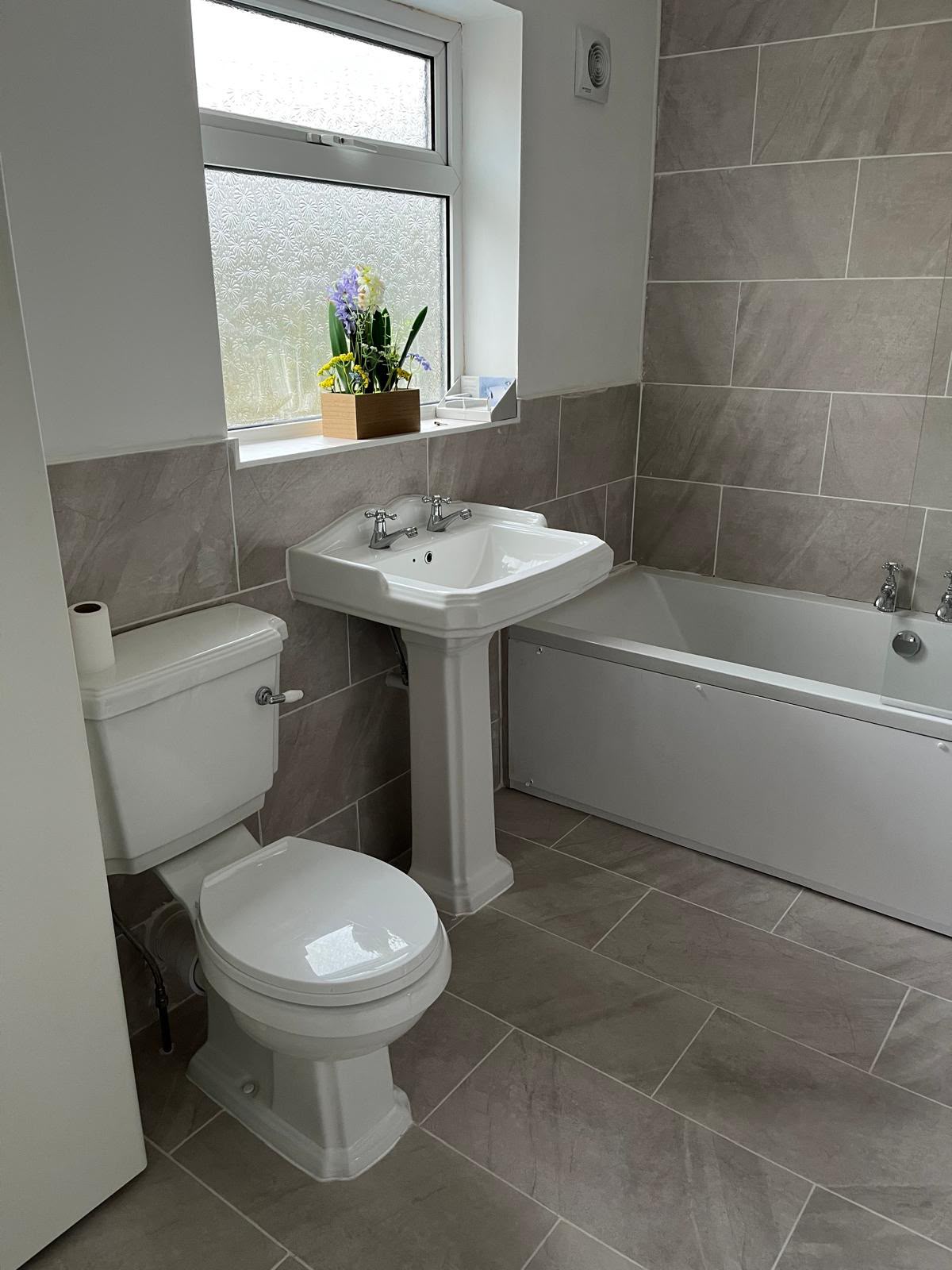
Completed bathroom suite installation by DR Smith Building, Swindon.
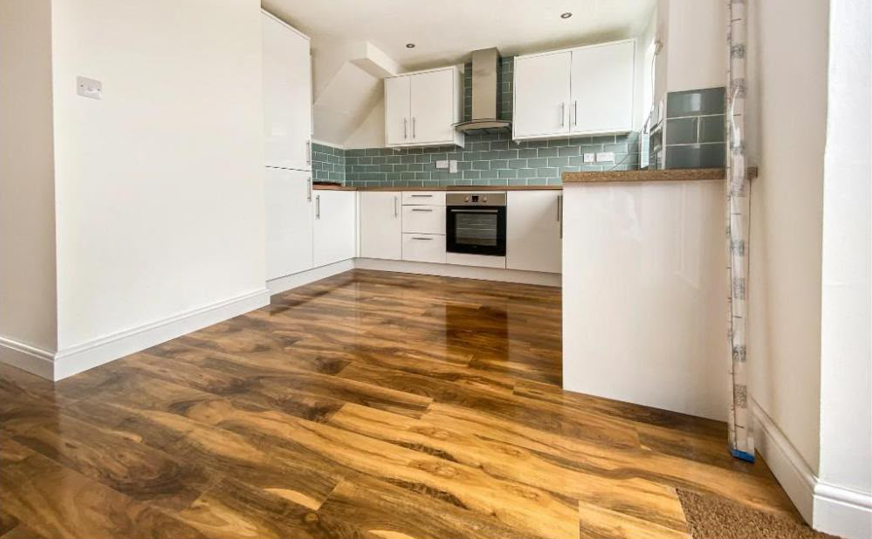
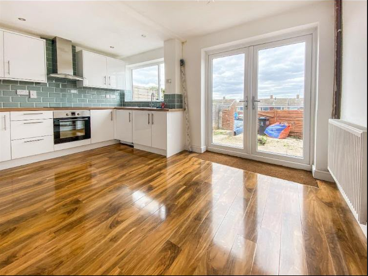
Finished open-plan kitchen with hardwood flooring by DR Smith Building.
Finished lounge with hardwood flooring by DR Smith Building general builders.
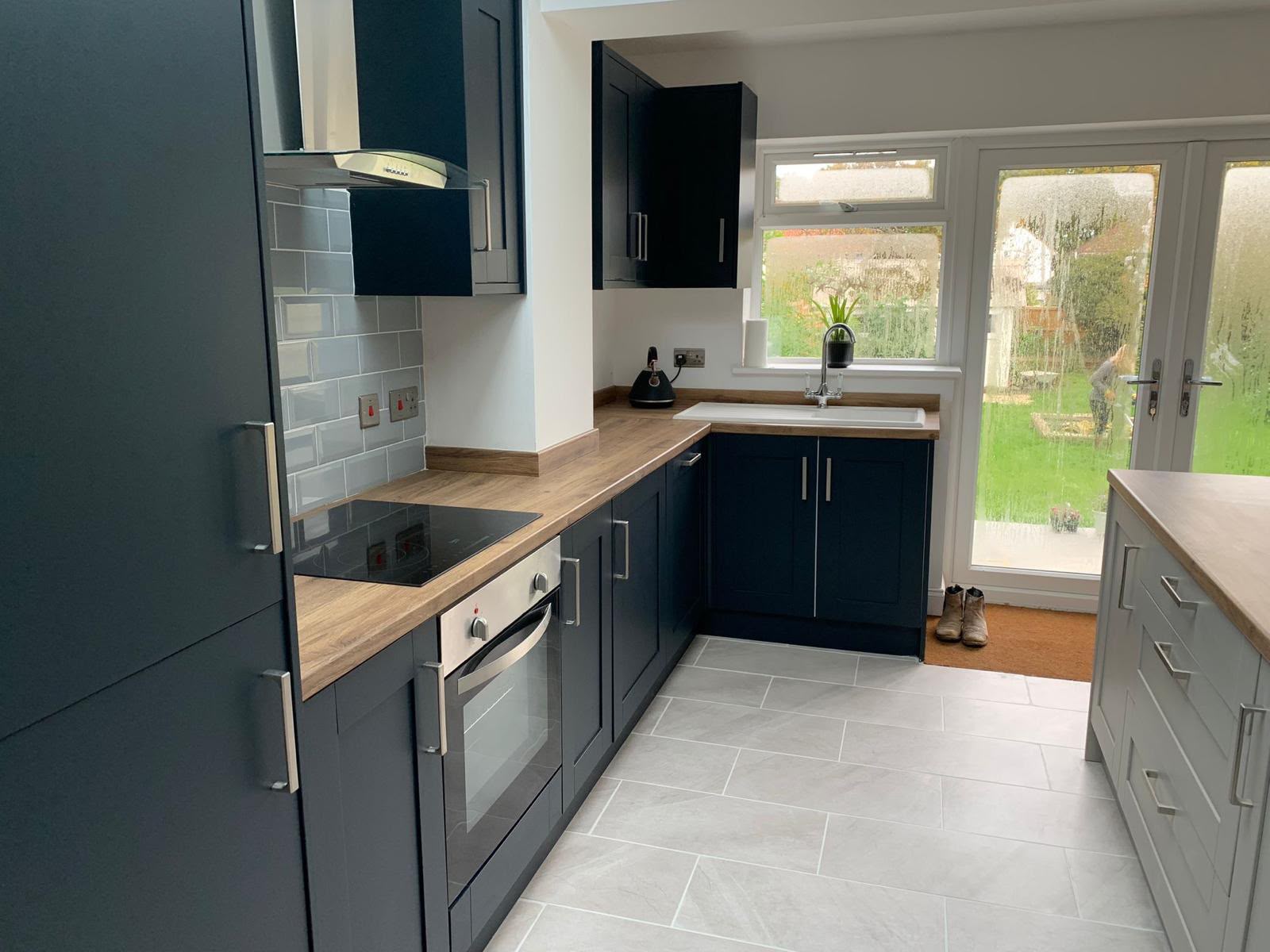
Finished navy fitted kitchen by DR Smith Building, Wiltshire.
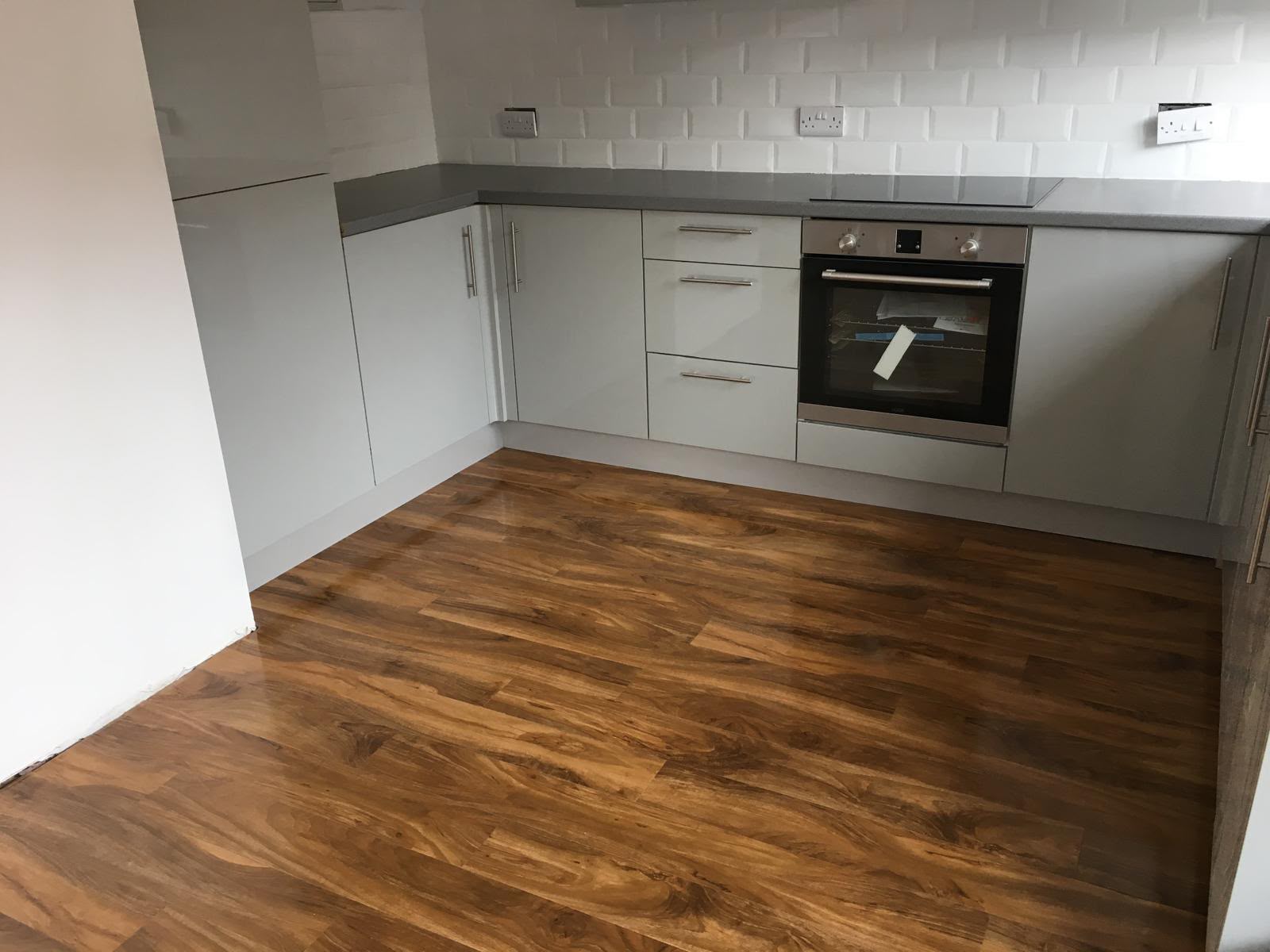
Completed kitchen with fitted units by DR Smith Building, Cotswolds.
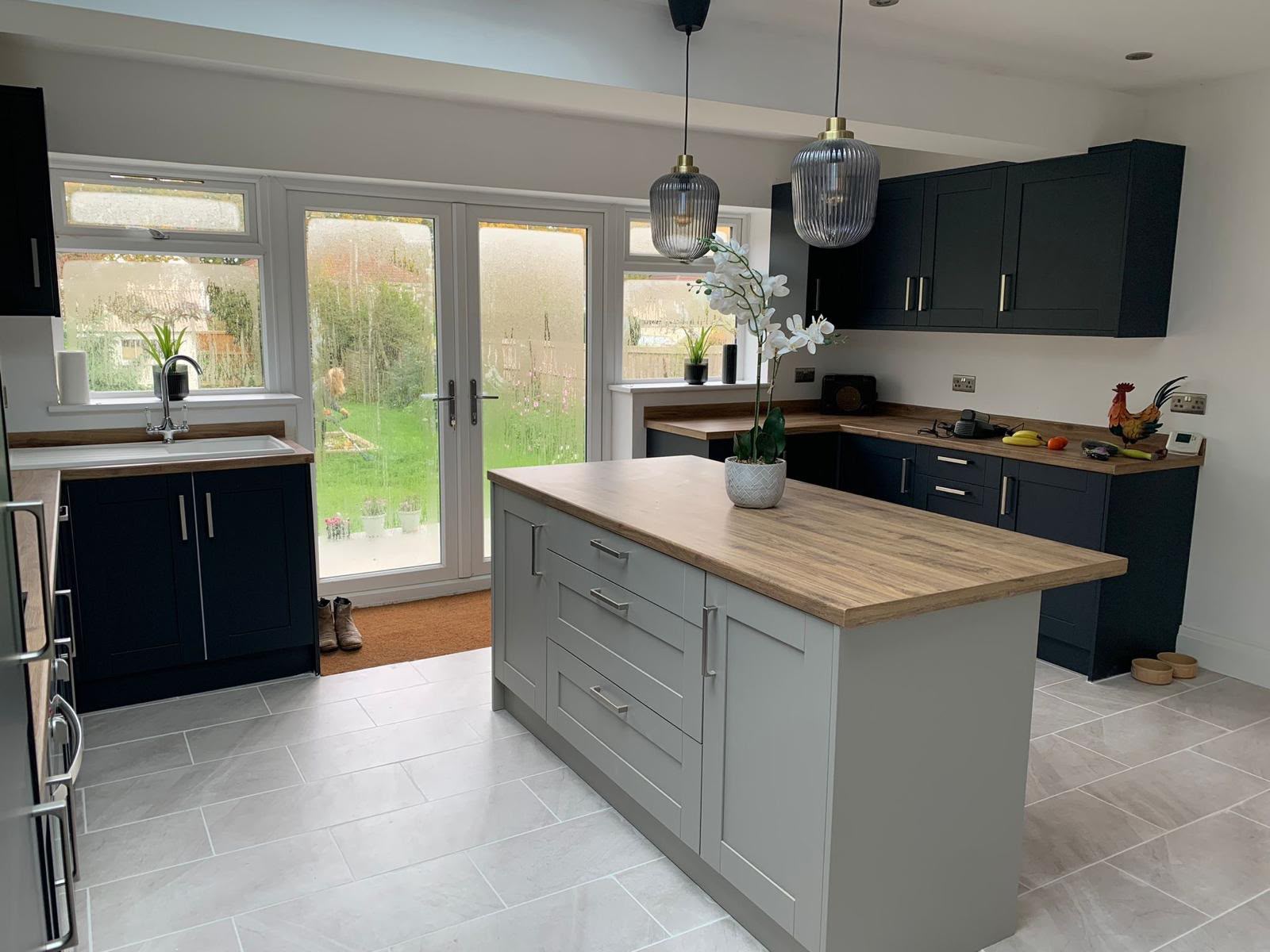
Completed kitchen with central island by DR Smith Building general builders.
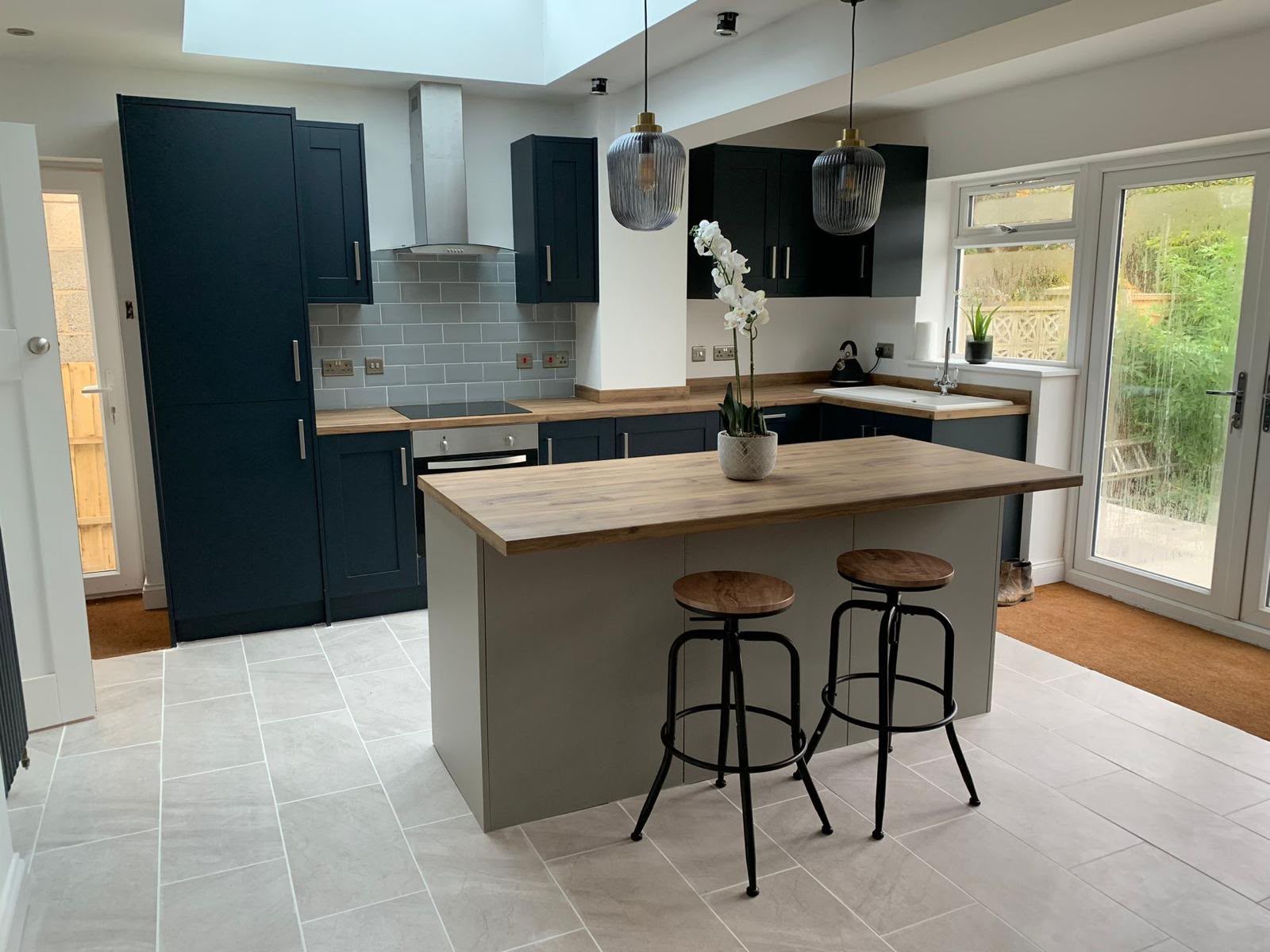
Finished open-plan kitchen with island by DR Smith Building extensions team.
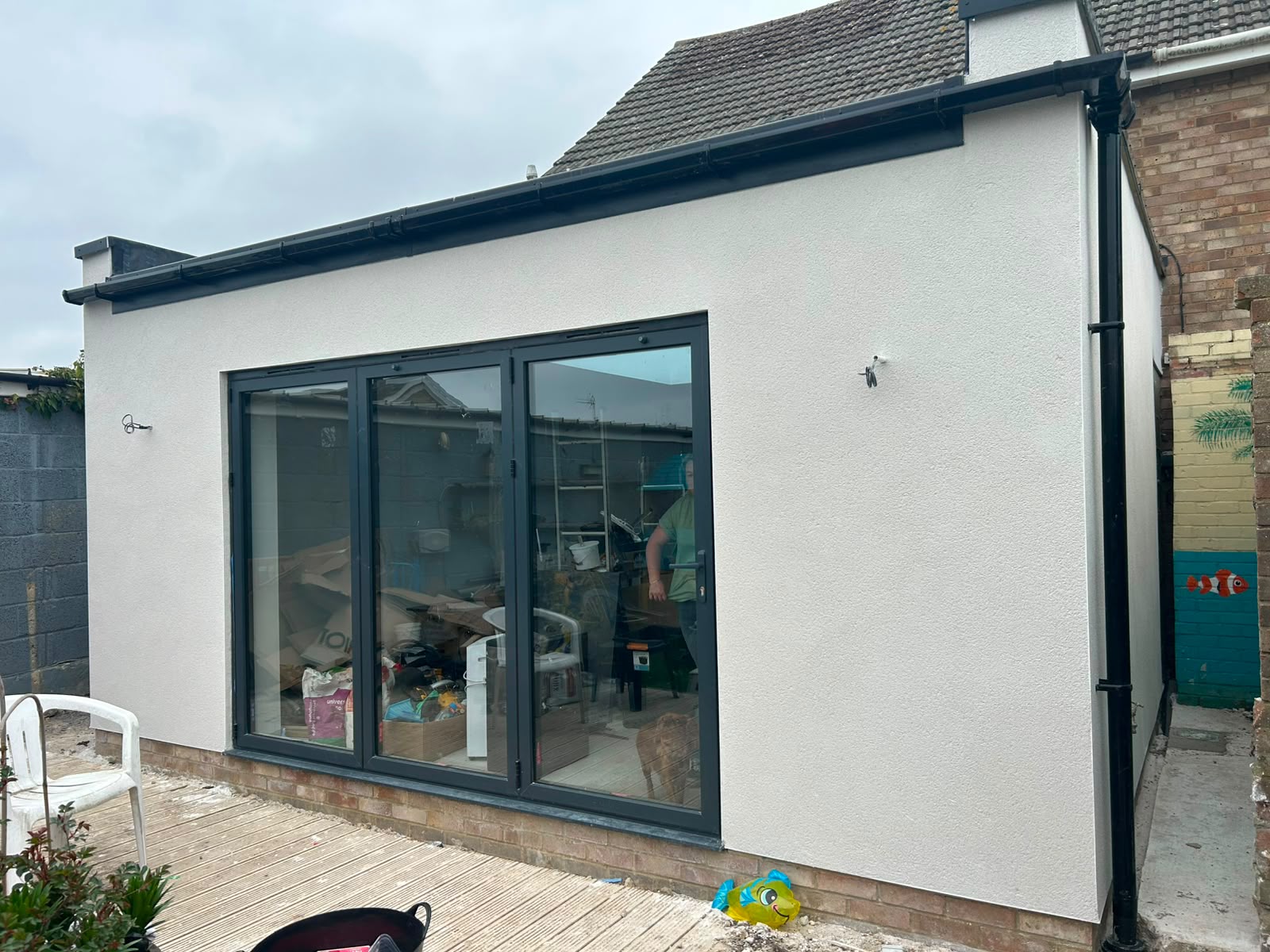
Completed rear single-storey extension exterior by DR Smith Building.
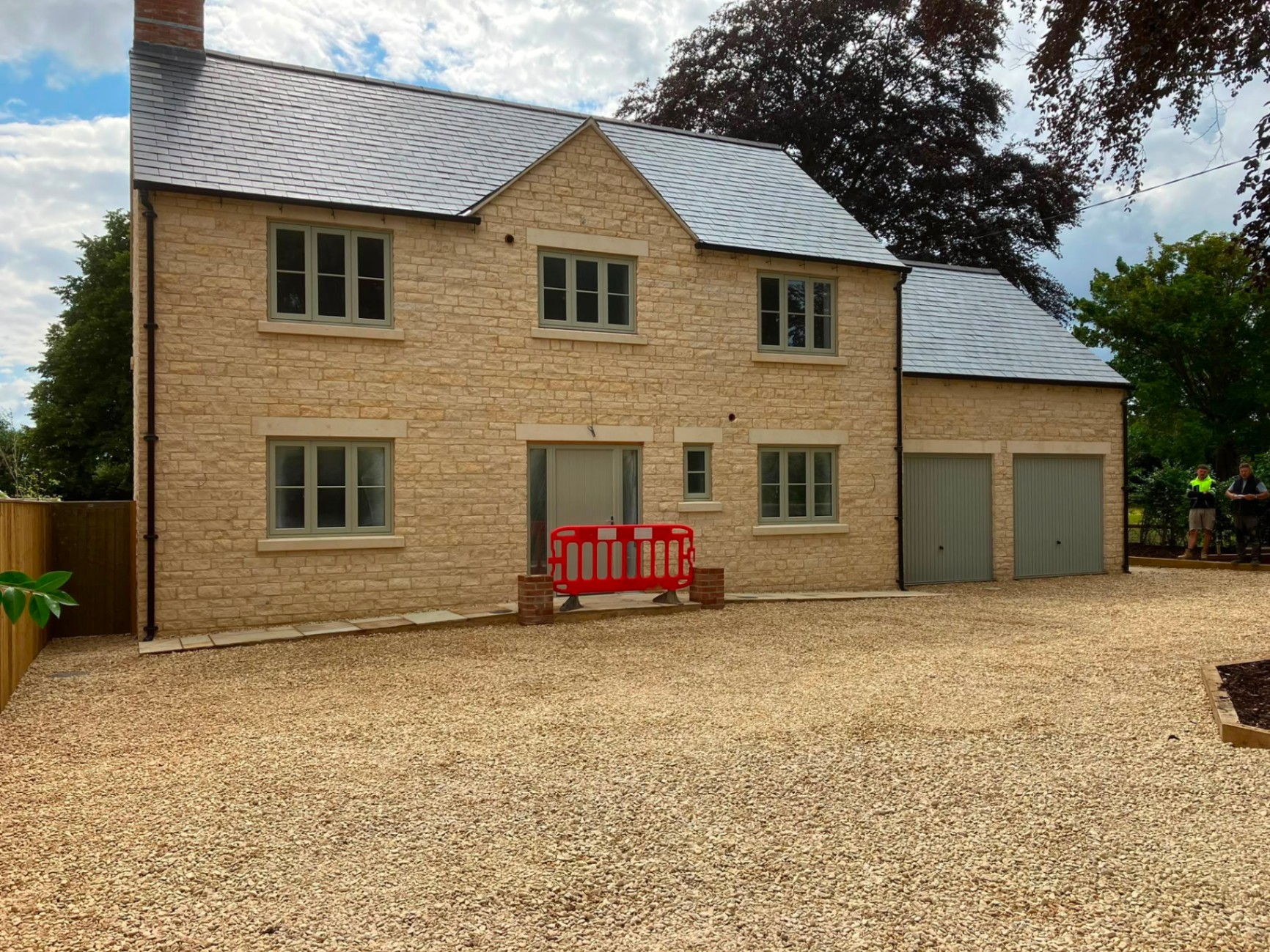
Completed Cotswold-stone new build by DR Smith Building stone masons.
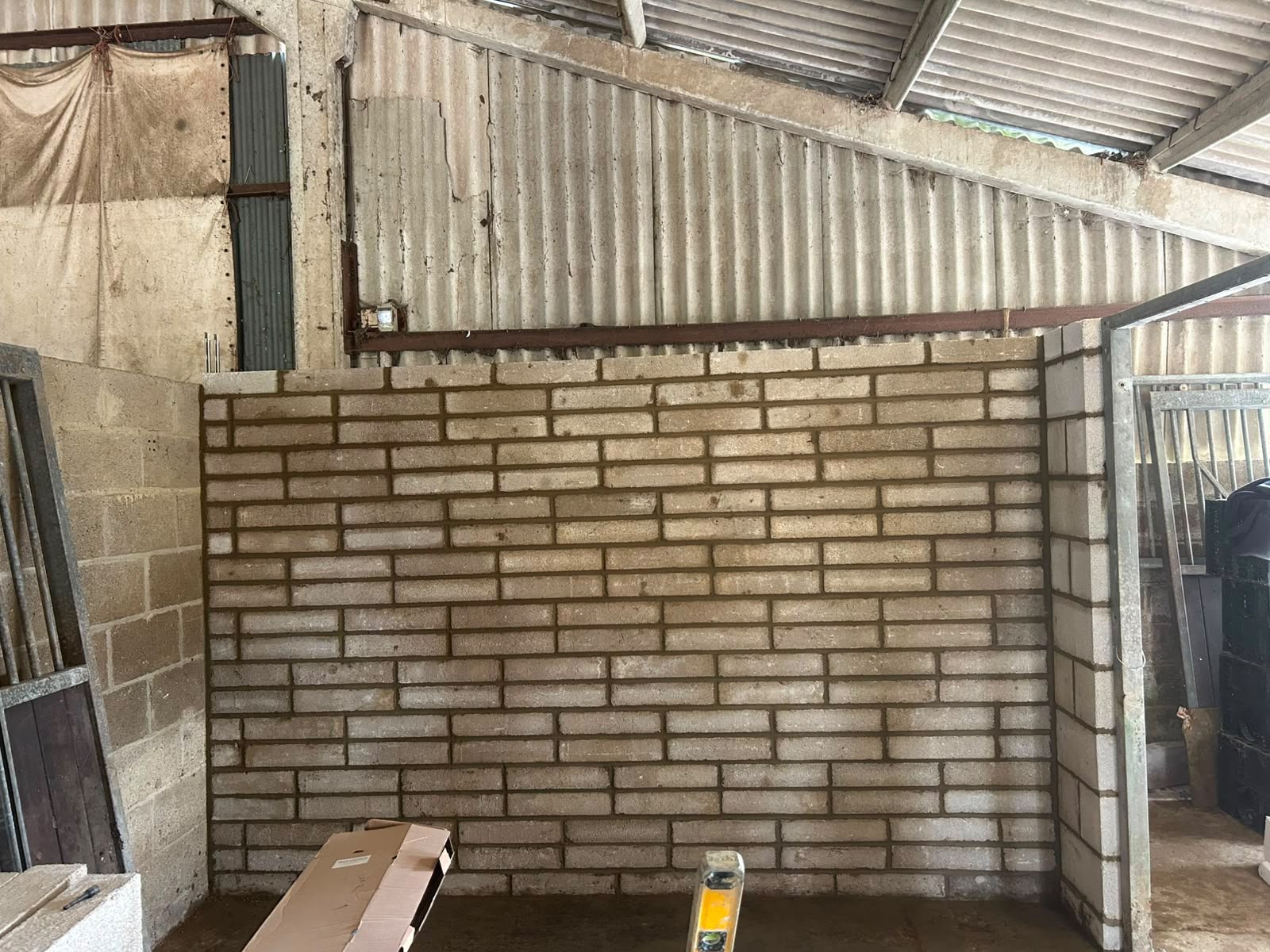
Block wall under construction on site by DR Smith Building bricklayers.
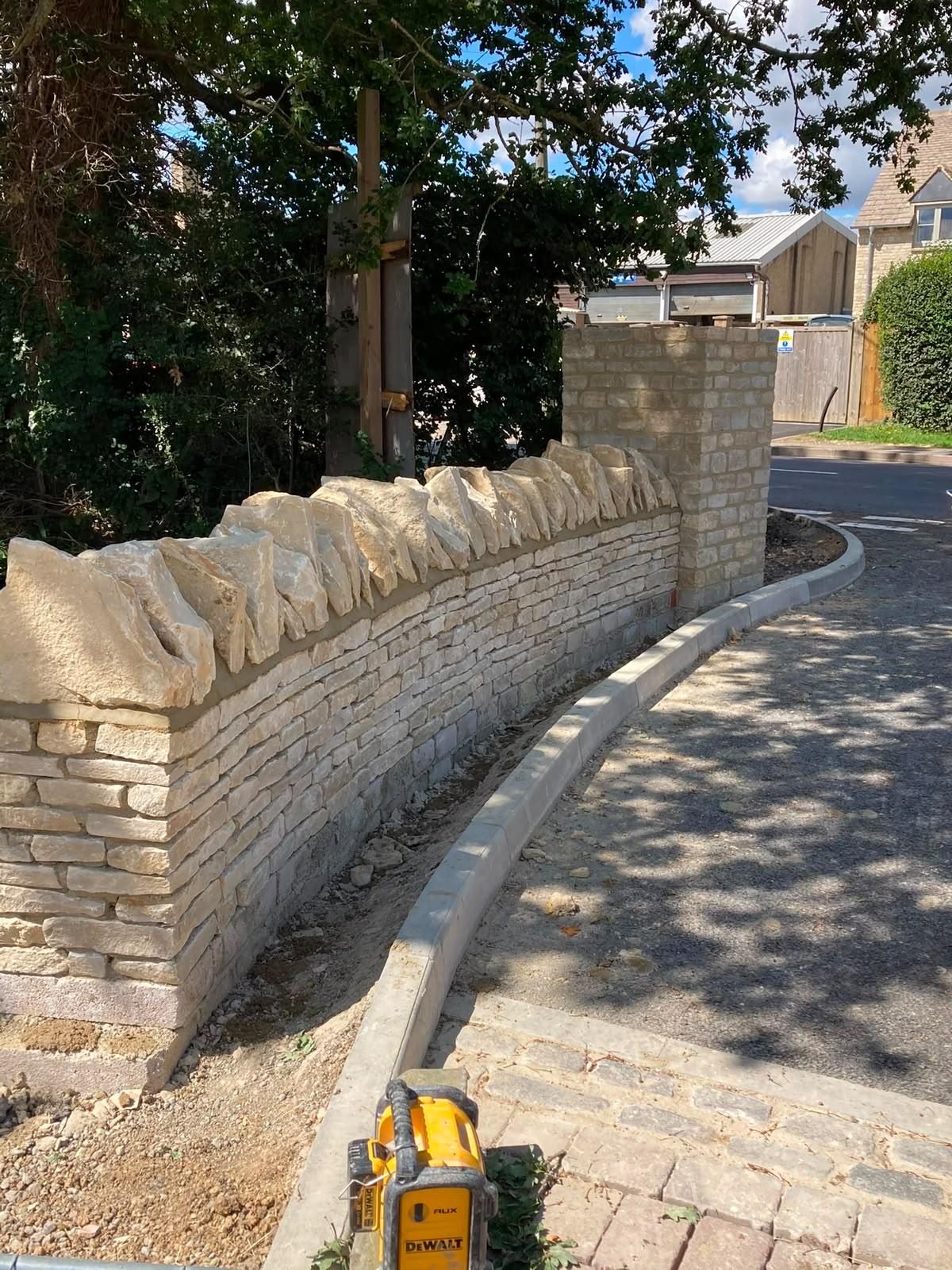
Curved Cotswold stone wall being built by DR Smith Building stone masons.
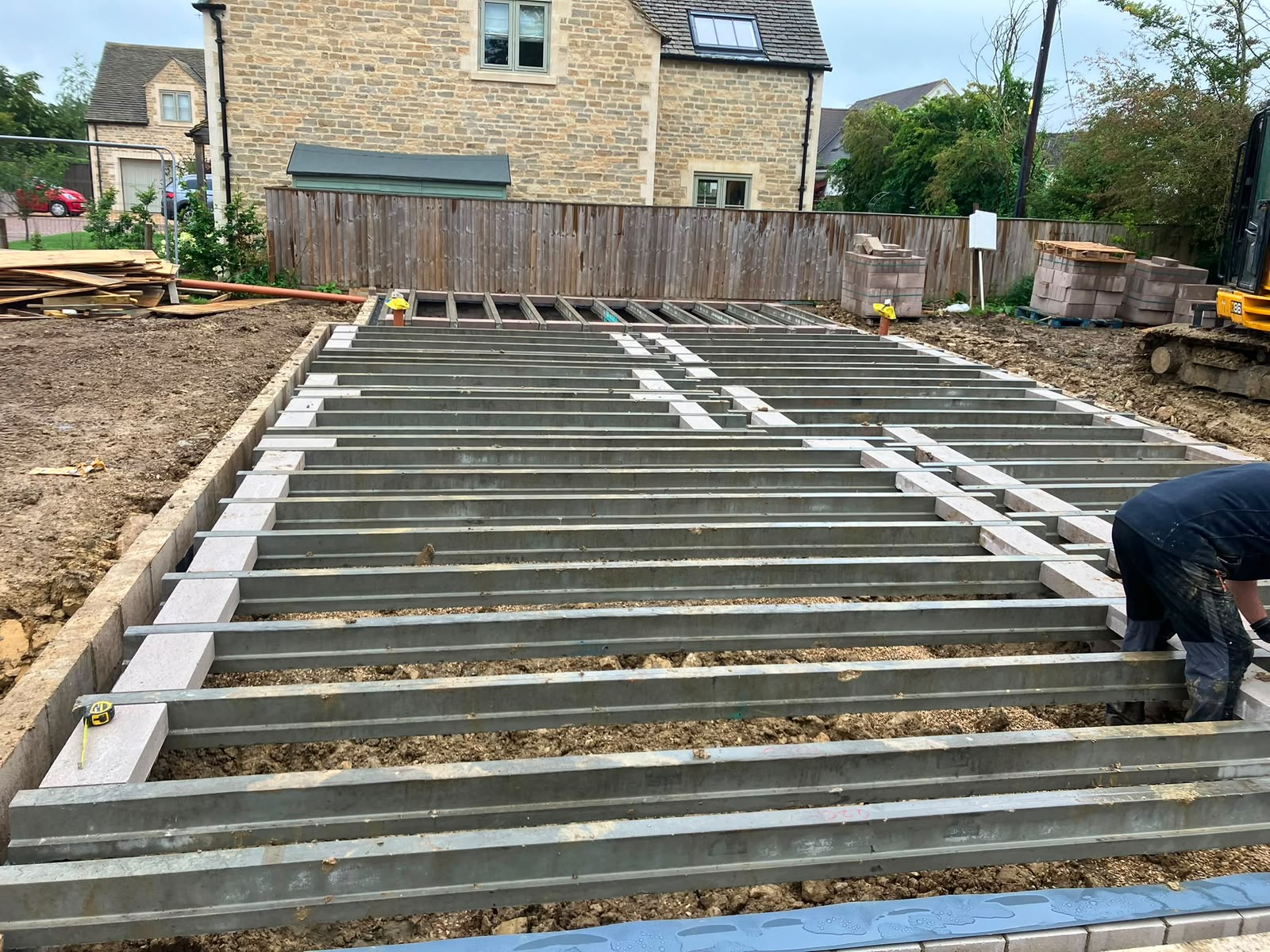
Groundworks in progress on a Wiltshire building site by DR Smith Building.
Patio installation underway by DR Smith Building hard landscapers.
Timber-framed roof going on stone walls, in-progress build by DR Smith Building.
Basement and retaining walls being formed on site by DR Smith Building.
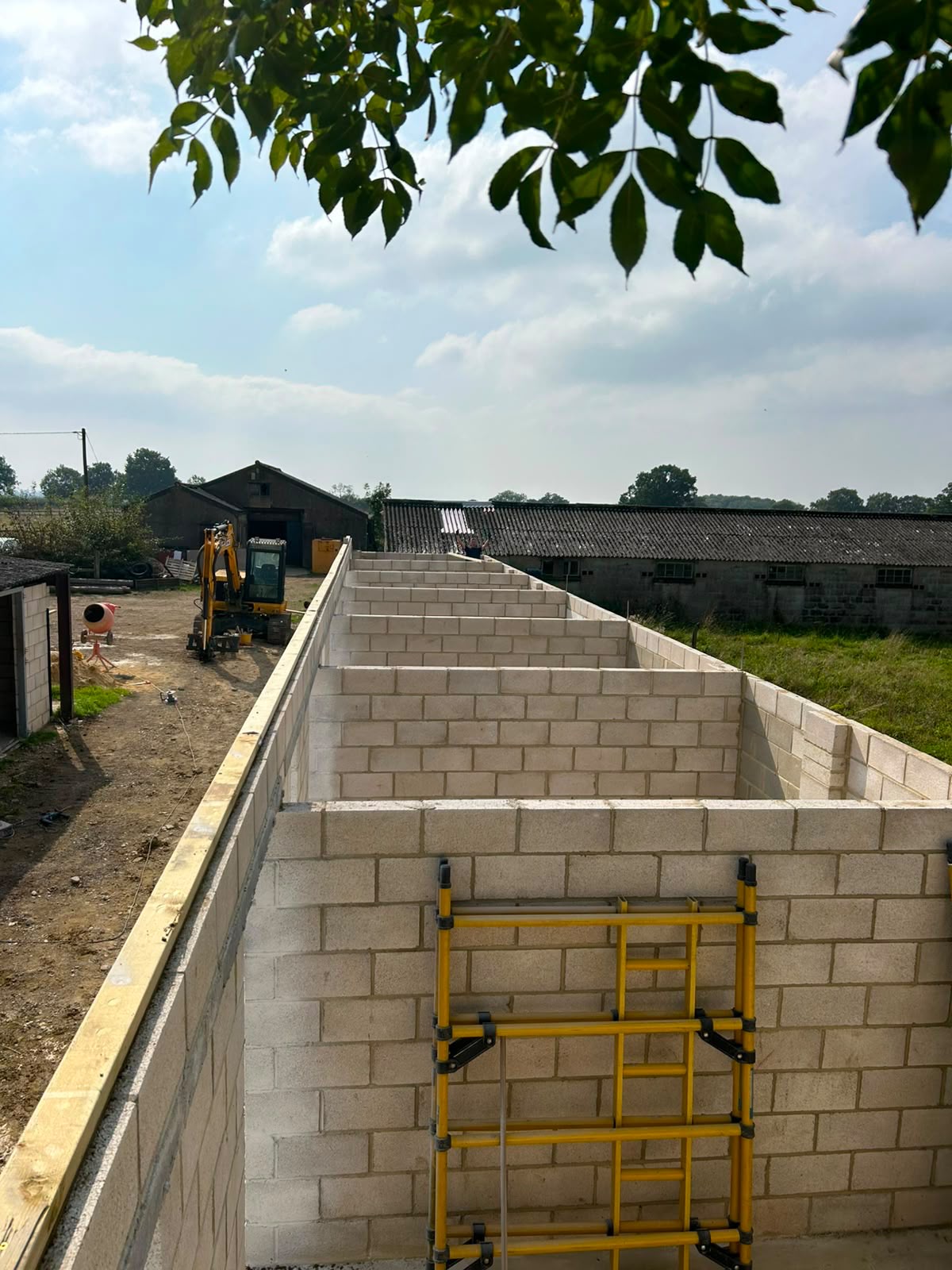
Block walls partially built on a live site by DR Smith Building.
Patio installation partway through by DR Smith Building, Cotswolds.
Interior plastering in progress by DR Smith Building plasterers, Swindon.
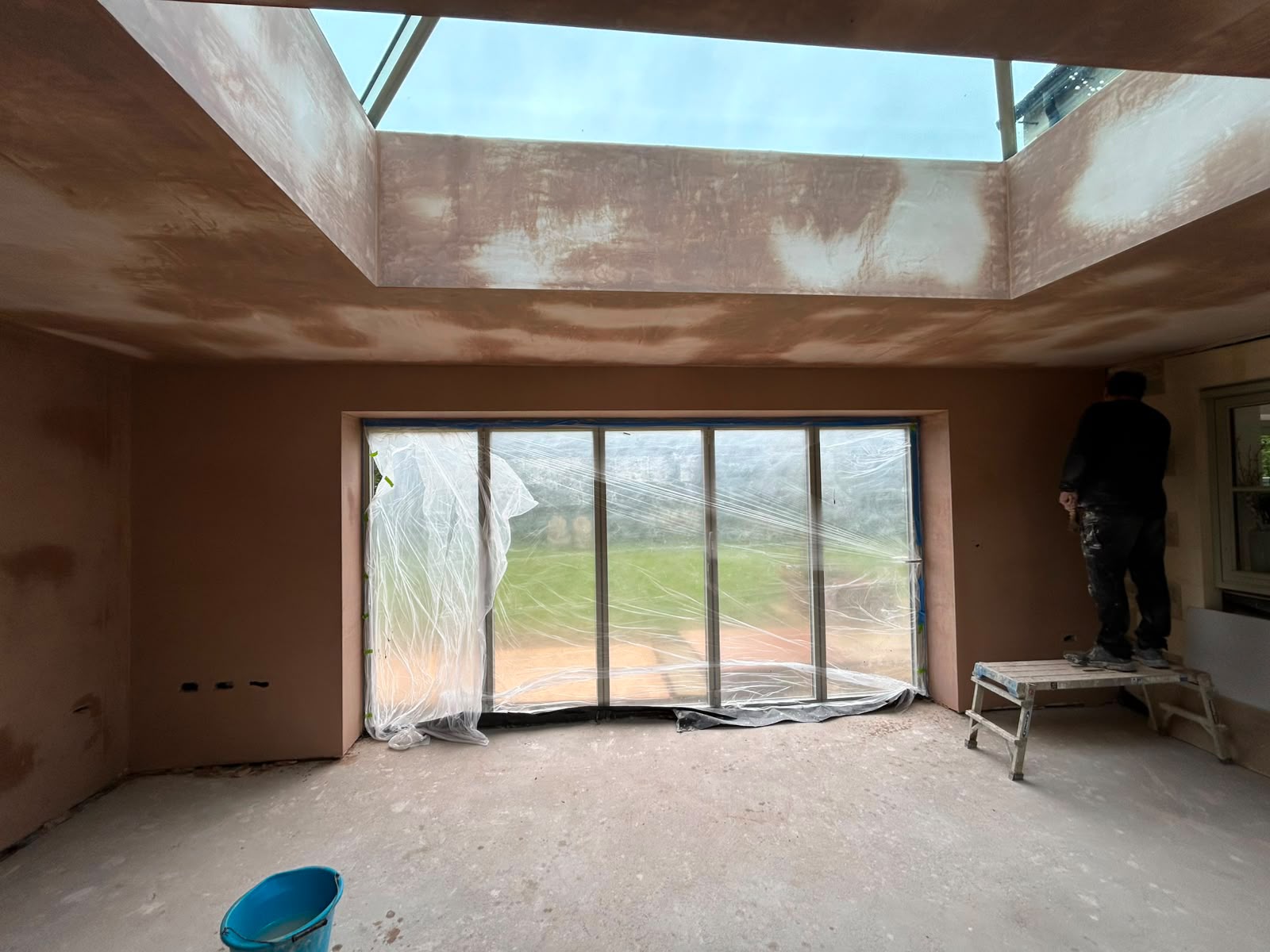
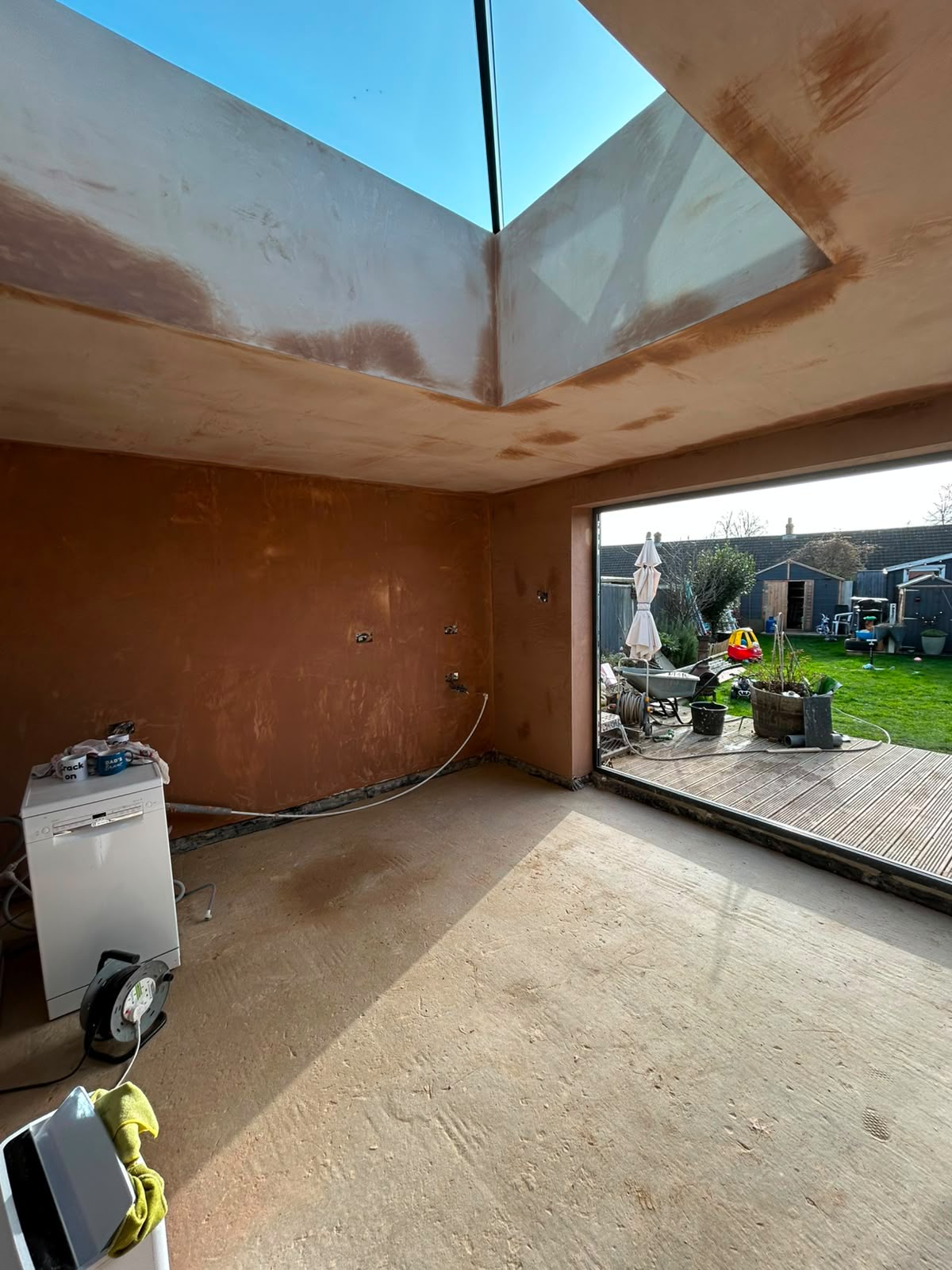
Freshly plastered walls curing on site by DR Smith Building.
Foundation stonework underway by DR Smith Building stone masons.
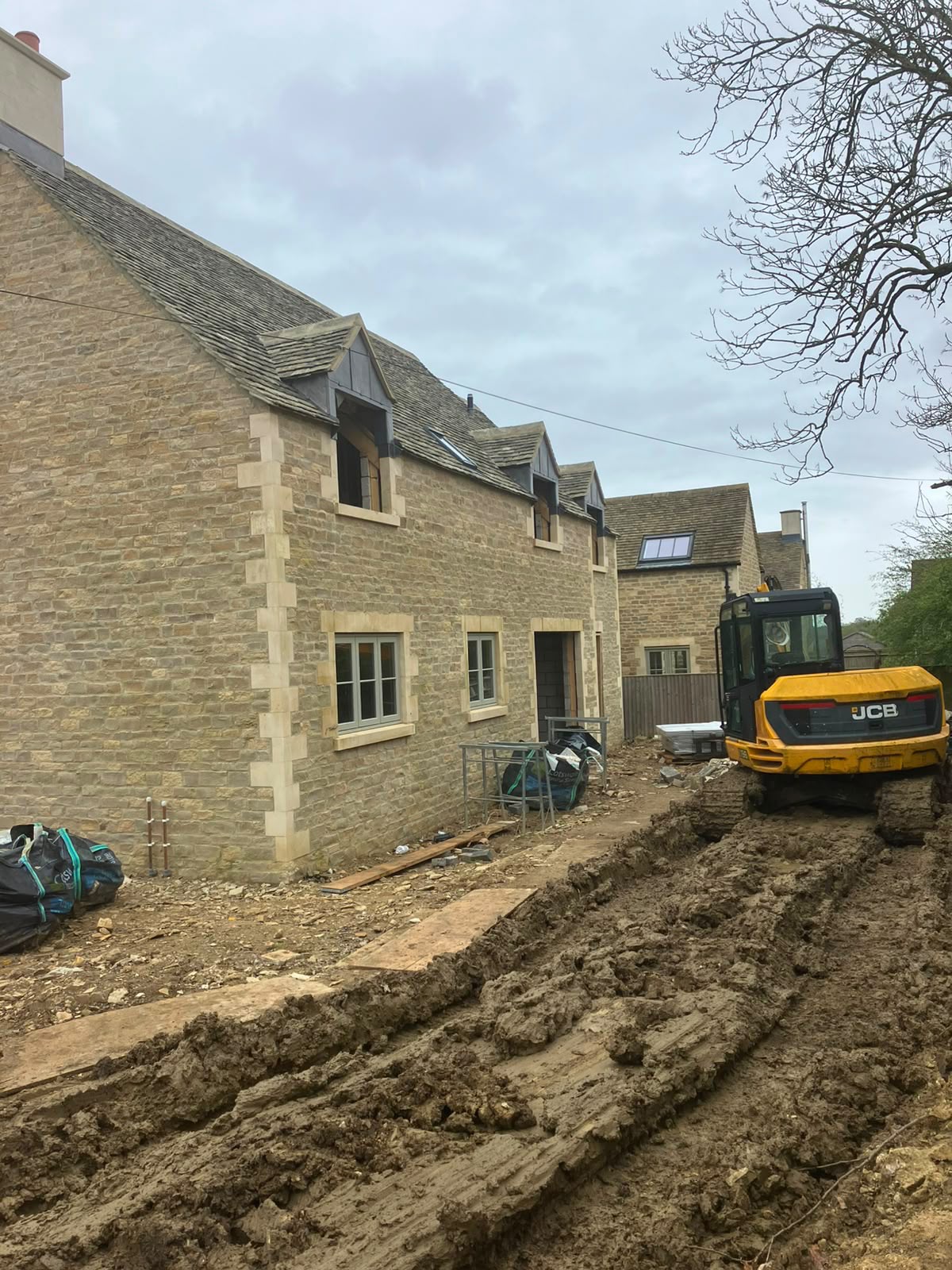
Stone build in progress with excavator on site by DR Smith Building.
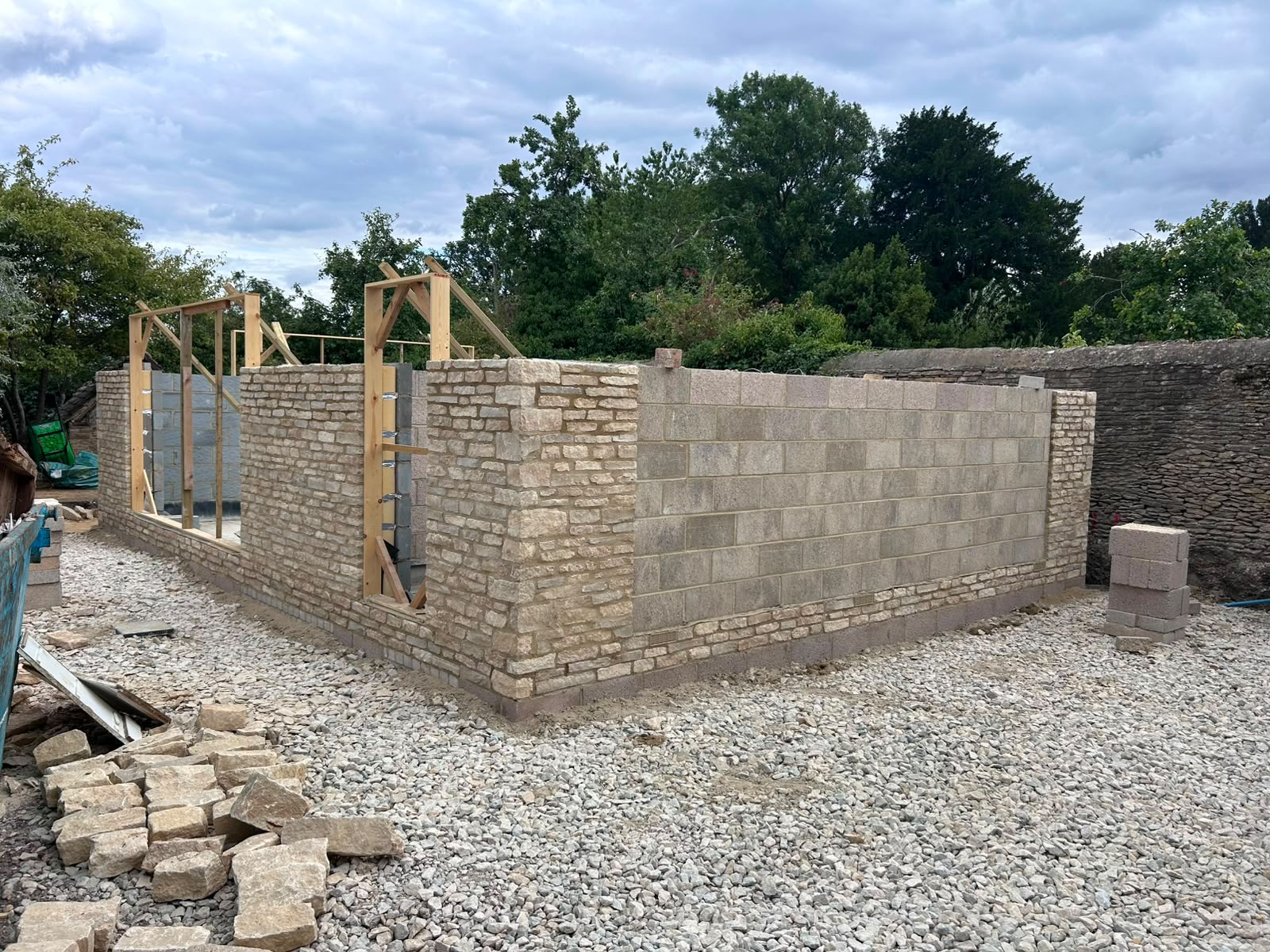
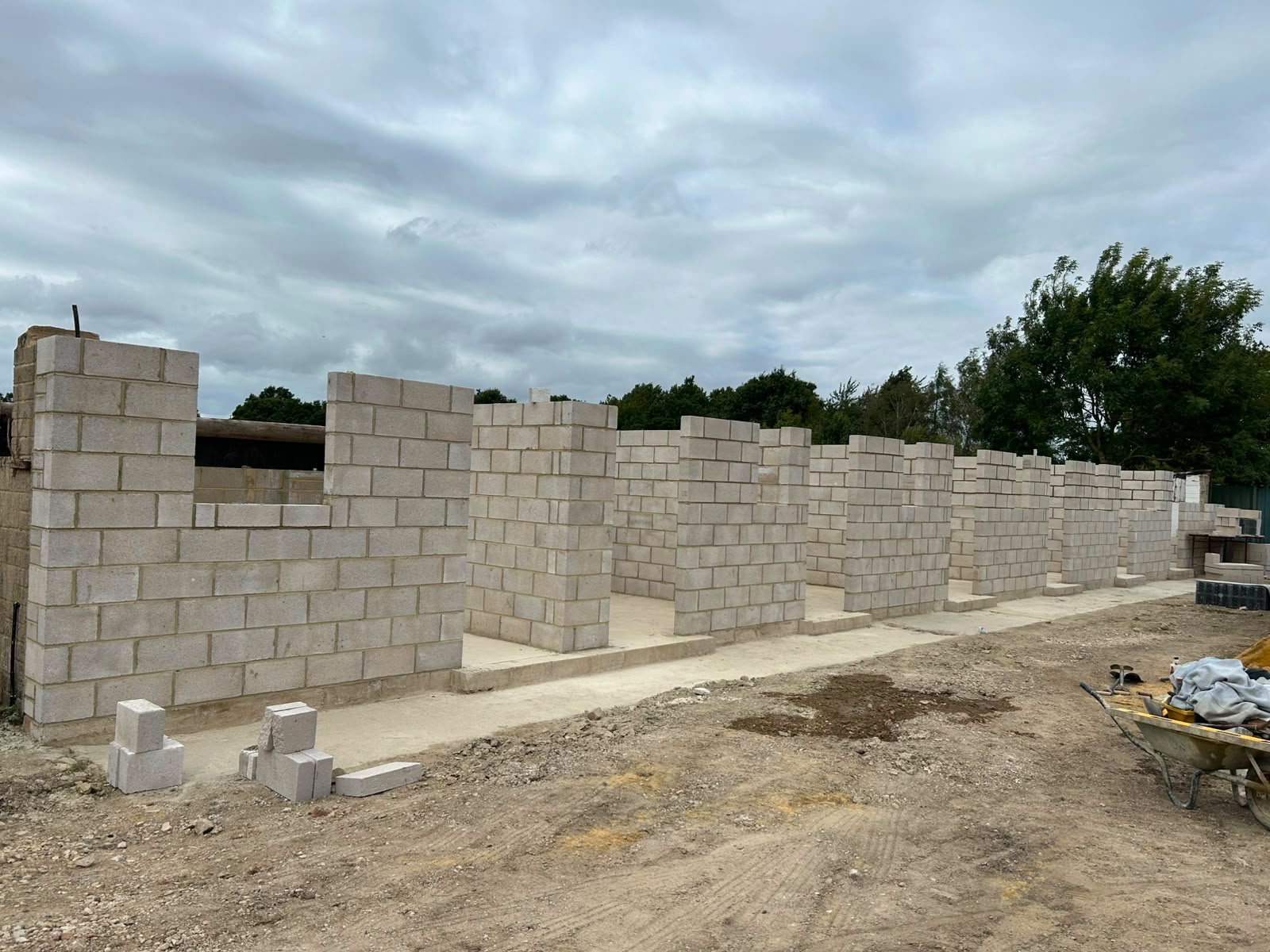
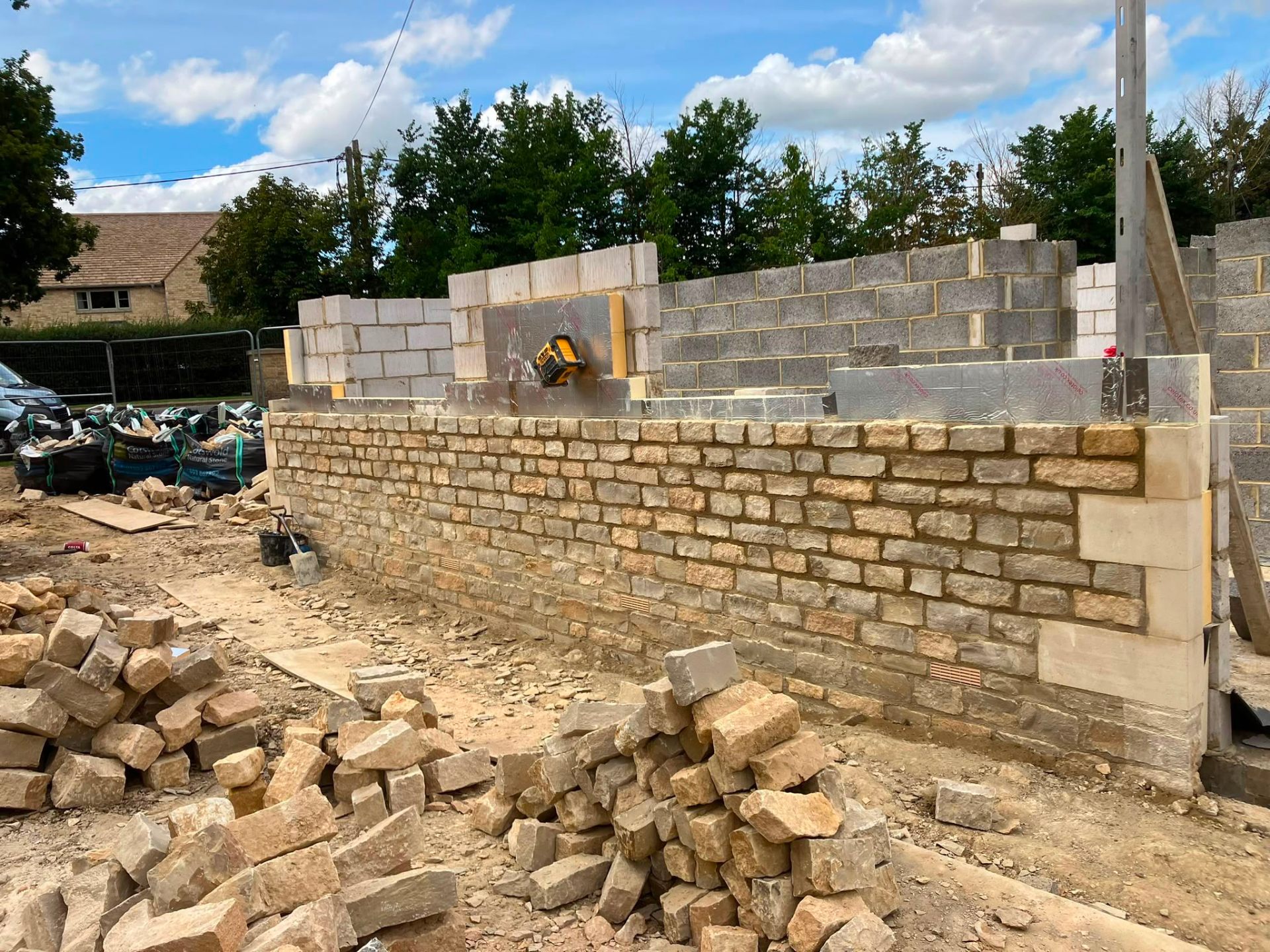
Partial stone wall with materials on site by DR Smith Building.

FAQs

Questions we're asked about stone laying.

Can't see yours? Ring Dale on 07926 334368.

How much does Cotswold stone walling cost per metre?

It varies with wall height, stone type (new vs reclaimed) and whether you already have the stone on site. We give you a written, itemised estimate after a free site visit so there are no surprises.

Do you supply the stone, or do I?

Either. Some clients already have stone stacked from a demolition; most ask us to supply. We'll price both ways and explain the trade-off.

How tall can a garden stone wall be?

Typically up to 1.8m without engineered piers or design. Taller than that, or a retaining wall over about 1.2m, needs proper foundation design: we'll flag it and get the right advice.

Will the wall need planning permission?

Boundary walls above 1m fronting a highway and 2m elsewhere generally need permission, and Conservation Areas add extra rules. Dale will flag it at the site visit: we don't build walls that shouldn't be built.

Do you do dry-stone walling?

We build walls that read as dry stone, with mortar hidden well back from the face. True heritage dry-stone rebuilds are a specialist heritage trade; we'll be honest about whether we're the right fit.

How long does a stone wall take to build?

A garden wall of 6–10 metres is usually a week to ten days depending on height and detailing. Weather affects lime-mortar work in winter: we plan around it.

Are you insured for this kind of work?

Yes, £5m public liability and £10m employers' liability. Documents available before we start.

Do you cover Cirencester, Lechlade and Burford?

Yes: those are core patches for stonework, along with Fairford, Faringdon, Witney, Highworth and Swindon.

Ready when you are

Get a free estimate for stone laying.

Free site visit at a time that suits. Written, itemised estimate in 3–5 working days. Staged payments, nothing due before we start.

Family-run since 1988
£5m public liability
Free site visits
Bank transfer or cash